The Role of Nitric Oxide Breath Analyzers in Healthcare
In recent years, breath-based diagnostics have emerged as a promising direction in modern healthcare. As part of in vitro diagnostics (IVD) and point-of-care testing (POCT), these technologies allow clinicians to assess health conditions in a non-invasive and efficient way.
Breath molecular diagnosis focuses on analyzing the composition of exhaled air. It is often referred to as breath testing or breath diagnosis. Pulmonary function testing (PFT), which evaluates airflow and pressure, is also considered part of this broader category.
Compared to traditional diagnostic methods, breath analysis offers faster results and better patient comfort, making it increasingly valuable in respiratory care.

What is the FeNO Test?
Nitric oxide (NO) is a small, lipid-soluble gas naturally produced in the human body. It plays an important role in regulating various biological processes.
The FeNO test (Fractional Exhaled Nitric Oxide) measures the concentration of nitric oxide in exhaled breath. This makes it a useful indicator of airway inflammation.
Nitric oxide is primarily produced in the respiratory tract. When inflammation occurs, FeNO levels tend to rise. Because of this strong correlation, FeNO is widely recognized as a reliable biomarker.
In clinical practice, FeNO can be measured through oral or nasal exhalation tests.
Clinical Applications of FeNO Testing
FeNO testing is widely used in the diagnosis and management of respiratory diseases.
It helps clinicians assess airway inflammation and supports the diagnosis of conditions such as asthma, including mild or atypical cases like cough-variant asthma.
It is also useful in differentiating between asthma, COPD, and asthma-COPD overlap syndrome. In addition, FeNO levels can provide insights into treatment response and long-term prognosis.
Beyond these conditions, FeNO testing can assist in evaluating airway inflammation in lung cancer patients, predicting treatment outcomes in pulmonary hypertension, and supporting diagnosis in allergic rhinitis and chronic cough.
Why FeNO Testing Matters
One of the biggest challenges in respiratory medicine is accurately assessing airway inflammation.
Traditional methods, such as symptom evaluation or pulmonary function tests, do not always reflect underlying inflammatory activity. This is where FeNO testing stands out.
It provides real-time, non-invasive insight into airway inflammation, making it particularly useful for ongoing disease monitoring and personalized treatment decisions.
The Core of a Nitric Oxide Breath Analyzer: NO Sensor
The performance of a nitric oxide breath analyzer largely depends on its NO sensor.
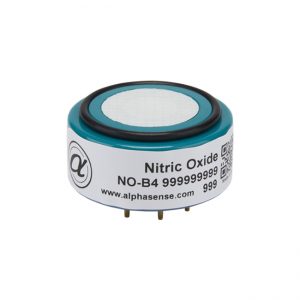
These sensors measure nitric oxide concentration in exhaled breath with high sensitivity. For example, the NO Sensor NO-B4 from Alphasense can detect NO levels below 10 ppb while maintaining strong stability and fast response times.
Such characteristics make it highly suitable for medical-grade FeNO measurement devices.
Conclusion
As the demand for precise and non-invasive diagnostic tools continues to grow, FeNO testing is becoming an essential part of respiratory disease management.
By combining nitric oxide breath analyzers with high-performance NO sensors, healthcare providers can gain deeper insights into airway inflammation and improve patient outcomes.
With its accuracy, convenience, and clinical relevance, FeNO testing is set to play an even greater role in the future of respiratory care.