Liquid Cooling Becomes Mainstream for Data Centers
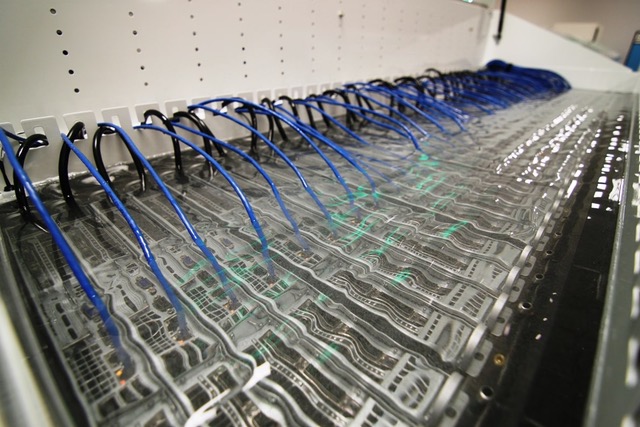
With the rapid growth of AI and high-performance computing (HPC), power density per rack in data centers has exceeded 50kW, while the PUE limitation of traditional air cooling has reached above 1.5. It is estimated that AI data center capacity is growing at approximately 33% per year and is expected to account for 70% of all data center demand by 2030.
Against this backdrop, liquid cooling technology is rapidly becoming the mainstream thermal management solution for data centers. The Coolant Distribution Unit (CDU) acts as the “neural center” of liquid cooling systems, using a network of sensors to manage fluid flow and ensure stable server operation under high loads. Within the CDU system, liquid level sensors play an irreplaceable role – directly impacting coolant circulation safety and overall system availability.
The Critical Role of Liquid Level Monitoring in CDUs
In CDU systems, monitoring the coolant level in the reservoir tank is fundamental to maintaining continuous and stable operation. Its core functions include:
-
Low-Level Alarm: Prevents pump dry-running and subsequent damage.
-
Refill Control: Interfaces with automatic refill systems to maintain coolant levels within a set range.
-
Leak Detection: An abnormal drop in coolant level can quickly indicate a leak.
-
High-Level Indication: Prevents overflow caused by overfilling.
Each of these functions relies on a highly reliable liquid level sensor. Especially in unattended data center rooms, the accuracy of level monitoring directly determines whether the CDU can achieve 24/7 uninterrupted operation.
Product Features of the UK SST LLG Series Optoelectronic Liquid Level Sensor
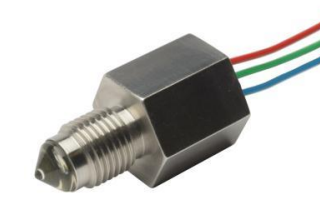
The LLG liquid level sensor belongs to the optoelectronic type, operating on the optical principle of total internal reflection and refraction. Specifically:
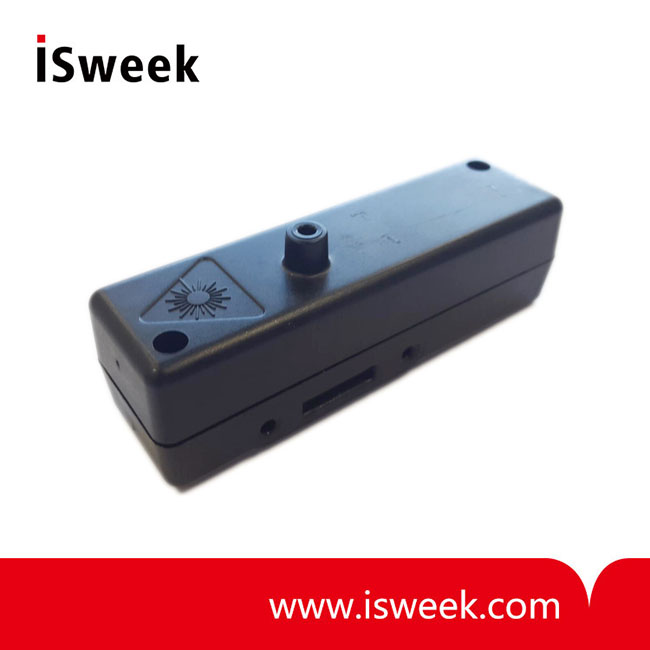
The LLG series operates on an optoelectronic principle: the sensor integrates an infrared LED and a phototransistor. When the probe tip is in air, light is totally reflected back to the detector within the prism tip. When the probe tip is immersed in liquid, the infrared light disperses out of the prism tip, causing a change in output state. This solid-state design has no moving parts, offering extremely high reliability.
Broad Liquid Compatibility
The LLG series can detect almost all types of liquids – both oil-based and water-based coolants. It is particularly well-suited for corrosive liquid environments such as acids, solvents, and deionized water, making it perfectly compatible with various coolants used in CDUs (e.g., ethylene glycol solutions, deionized water, fluorinated fluids). This means that whether the CDU system uses traditional ethylene glycol coolant or newer fluorinated fluids, the LLG liquid level sensor responds accurately.
Extreme Environmental Durability
The 316L stainless steel and glass probe structure resists long-term erosion from various coolants and operates stably under high-pressure and high-temperature conditions. For liquid cooling CDUs, coolant temperatures and pressures can fluctuate during circulation. The rugged design of the LLG sensor ensures stable output over long-term use.
High Drive Capability and Flexible Installation
-
High Drive Capability: With a maximum switching current of 1A, it can directly drive alarm lights, solenoid valves, or small pumps, simplifying system design.
-
Multiple Mounting Thread Options: Available in M12×1, 1/2″ SAE, 1/4″ NPT, 1/2″ NPT, and more, adapting to different CDU designs.
-
Wide Voltage Compatibility: Supports dual voltage ranges of 4.5-15.4VDC or 8-30VDC, accommodating various control system power designs.
These features allow the LLG liquid level sensor to be easily integrated into various CDU control systems without requiring additional driver circuits or power conversion modules.
Typical Application Scenarios in Liquid Cooling CDUs
1. High and Low Level Monitoring in Reservoir Tanks
In CDU coolant reservoirs, LLG sensors can be mounted on the tank sidewall to provide threshold level detection. When the level drops below the minimum threshold, the sensor triggers a refill command or alarm. When the level reaches the maximum threshold, it stops refilling to prevent overflow. This threshold-based detection is more economical and reliable than continuous level measurement, especially for cost-sensitive large-scale deployments.
2. Low-Level Protection at Pump Inlets
To prevent pump damage from dry-running, an LLG sensor can be installed in the reservoir area just before the pump inlet. If the level becomes too low, the sensor immediately shuts down the pump for protection. The pump is a core power component in the CDU system, and its repair cost is high. Low-level protection significantly extends pump service life.
3. Leak Detection Tray Monitoring
A leak detection tray can be placed at the bottom of the CDU or near critical pipe joints. The LLG sensor sensitively detects the presence of even small amounts of liquid, promptly identifying leaks and triggering alarms to prevent coolant from escaping and damaging IT equipment. Because the LLG sensor responds quickly to tiny amounts of liquid, it is more suitable for leak detection than traditional float switches.
4. Refill Tank Level Control
For CDUs equipped with automatic refill systems, LLG sensors enable automatic high and low level control of the refill tank, ensuring long-term autonomous system operation without manual intervention. This greatly reduces the operational labor costs of data centers while avoiding system downtime caused by untimely manual refilling.