From original equipment manufacturers (OEMs) such as Boeing and Airbus to Tier 1 system suppliers, fire protection has always been a critical safety requirement in aircraft design, testing, and certification. One of the most significant fire-related hazards in aviation is the risk of fuel tank explosion, which may be triggered by electrical faults, lightning strikes, or electrostatic discharge.
Over the years, aircraft manufacturers have adopted multiple strategies to mitigate this risk. Among them, reducing the oxygen concentration inside aircraft fuel tanks has proven to be one of the most effective approaches. This is typically achieved by introducing inert gases—most commonly nitrogen—to displace oxygen and suppress combustion.
At the core of these inerting strategies lies a critical sensing component: the zirconia oxygen sensor. Due to their accuracy, reliability, and ability to withstand harsh aerospace environments, zirconia-based oxygen sensors have become the industry standard for continuous oxygen concentration monitoring in modern aircraft.
In this article, ISweek explains how zirconia oxygen sensors support aerospace fire protection and why they are an essential component of Onboard Inert Gas Generation Systems (OBIGGS). Engineers involved in aircraft safety systems, fuel tank design, or sensor integration will gain insight into how these sensors help reduce explosion risks and maintain operational safety.
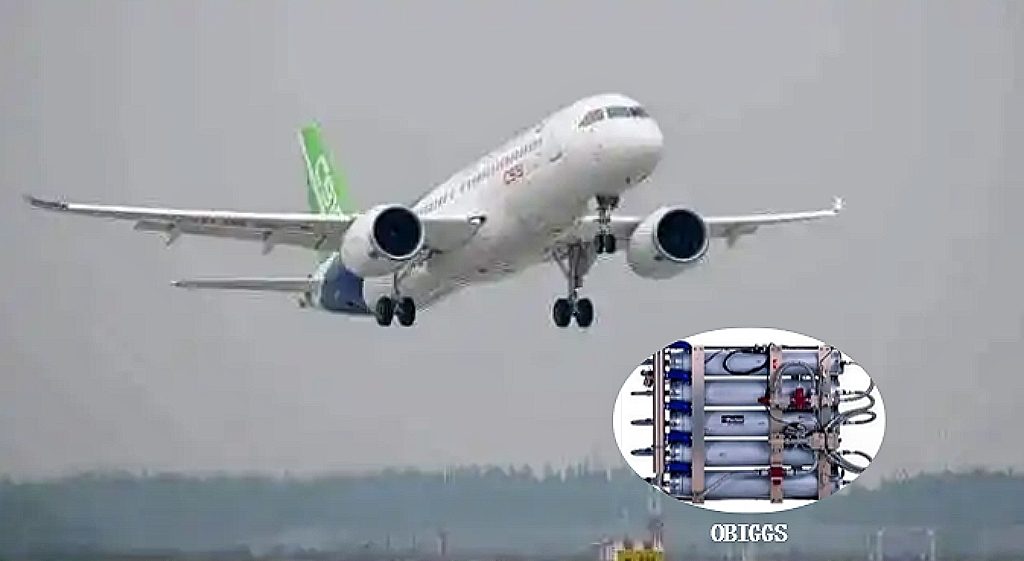
How Aircraft Fuel Tank Explosion Risks Are Reduced
Fuel tank explosions represent a severe safety threat and have long been a focus of aerospace research and development. One of the fundamental principles of fuel system fire prevention is removing one element of the fire triangle—oxygen.
OBIGGS and Aircraft Fuel Tank Inerting Systems
Today, most modern commercial aircraft rely on OBIGGS (Onboard Inert Gas Generation Systems). These systems use air separation modules (ASMs) to extract nitrogen from compressed air, producing nitrogen-enriched air (NEA) that is pumped into the fuel tank.
By lowering oxygen levels below the flammability threshold, NEA renders fuel vapors inert and significantly reduces ignition risk. As a result, OBIGGS has become a cornerstone of aircraft fuel tank inerting systems in both commercial and military aviation.
Military aircraft, however, may employ a wider range of inerting technologies—including reticulated foam, halon systems, and liquid nitrogen—due to more extreme operating environments and combat-related threats.
Regardless of the inerting method used, accurate oxygen concentration monitoring is essential. Any measurement error can compromise safety margins and increase the risk of fire or explosion. This is where zirconia oxygen sensors play a vital role.
Advantages of Zirconia Oxygen Sensors in Aerospace Fire Protection
Why Zirconia Oxygen Sensor Technology is Preferred
Zirconia oxygen sensors, also known as solid-state electrolyte oxygen sensors, are uniquely suited for aerospace fire protection systems. They deliver real-time, high-resolution oxygen concentration measurements that are critical for maintaining effective fuel tank inerting.
Key advantages include:
-
High measurement accuracy across wide oxygen ranges
-
Excellent long-term stability
-
Resistance to contamination and sensor drift
-
Reliable operation under extreme temperature and vibration
Continuous Monitoring of Inerting Performance
In OBIGGS and similar onboard inert gas generation systems, zirconia oxygen sensors enable continuous monitoring of oxygen levels within the fuel tank environment. This data allows the system to dynamically regulate nitrogen flow and maintain oxygen concentrations below critical thresholds.
Such real-time feedback supports adaptive safety control during all phases of flight, enhancing overall aviation safety.
Redundancy and Layered Safety Architecture
Aviation fire protection relies on layered safety strategies. While inerting systems passively reduce oxygen levels, zirconia oxygen sensors serve as active diagnostic components.
If inert gas delivery degrades or fails, rising oxygen levels are immediately detected. This redundancy enables early warnings, maintenance alerts, or corrective actions—before hazardous conditions develop.
Early Detection of System Degradation or Leaks
Zirconia oxygen sensors also support predictive maintenance by identifying abnormalities within inerting systems. Unexpected increases in oxygen concentration may indicate:
-
Air separation module (ASM) degradation
-
Leaks in nitrogen distribution lines
-
System control or valve malfunctions
Early detection helps reduce downtime, prevent safety-critical failures, and maintain compliance with aviation safety regulations.
Aerospace Applications of SST Zirconia Oxygen Sensors
SST has developed a range of zirconia oxygen sensors specifically engineered for aerospace environments. These sensors are widely used by leading aircraft manufacturers such as Boeing and Airbus and form an integral part of many OBIGGS installations.
Designed for Harsh Aerospace Conditions
SST zirconia oxygen sensors are built to withstand:
-
High vibration levels
-
Extreme temperature variations
-
Continuous long-term operation
Their ceramic-based sensing technology delivers:
-
Fast response times
-
High measurement precision
-
Excellent long-term stability
-
Strong resistance to contamination and aging
Each sensor measures the oxygen partial pressure difference between a reference air source and the fuel tank sample gas. This signal is transmitted to the OBIGGS controller, which adjusts nitrogen generation and distribution accordingly.
Simplified Integration and Maintenance
Beyond performance, SST oxygen sensors are designed for easy system integration, making them compatible with a wide range of fuel tank geometries and system architectures. Simplified installation and maintenance help aircraft operators reduce service costs while maximizing system uptime.
Conclusion: Zirconia Oxygen Sensors as a Cornerstone of Aircraft Fire Safety
Aerospace fire protection is a complex, multi-layered challenge. Effective fuel tank inerting remains one of the most powerful strategies for reducing the risk of catastrophic explosions—and zirconia oxygen sensors are essential to its success.
By delivering accurate, reliable, and continuous oxygen concentration measurements, SST zirconia oxygen sensors play a critical role in modern aviation safety systems. They enable OBIGGS and other inerting solutions to operate at peak performance, ensuring the highest safety standards for both commercial and military aircraft.
If you are developing, upgrading, or maintaining aerospace fire protection systems and require a reliable zirconia oxygen sensor solution, please contact ISweek to discuss your specific application needs. Our technical engineering team will be happy to support your project.
FAQ
Q1: What is OBIGGS and why is it critical for aircraft fuel tank safety?
OBIGGS (Onboard Inert Gas Generation System) is designed to reduce the oxygen concentration inside aircraft fuel tanks by supplying nitrogen-enriched air. By lowering oxygen levels below the flammability threshold, OBIGGS significantly reduces the risk of fuel vapor ignition and fuel tank explosions, making it a critical component of modern aircraft fire protection systems.
Q2: Why is oxygen concentration monitoring important in fuel tank inerting systems?
Accurate oxygen concentration monitoring ensures that fuel tank inerting systems operate within safe limits. If oxygen levels rise above acceptable thresholds, the risk of combustion increases. Continuous monitoring allows aircraft systems to adjust inert gas flow in real time and maintain safe operating conditions throughout all phases of flight.
Q3: Why are zirconia oxygen sensors commonly used in OBIGGS systems?
Zirconia oxygen sensors are widely used in OBIGGS because they provide fast, accurate, and stable oxygen measurements under harsh aerospace conditions. Their solid-state ceramic design allows reliable operation in environments with high vibration, temperature variation, and continuous duty cycles, making them well suited for aircraft fuel tank applications.
Q4: How does a zirconia oxygen sensor enhance aircraft fire protection?
A zirconia oxygen sensor continuously measures oxygen levels inside the fuel tank or inert gas supply lines. This real-time feedback enables the OBIGGS control system to maintain oxygen concentration below flammability limits, supporting effective fuel tank inerting and improving overall aircraft fire protection.
Q5: Can zirconia oxygen sensors detect failures or degradation in OBIGGS systems?
Yes. Unexpected changes in oxygen concentration may indicate issues such as air separation module degradation, nitrogen distribution leaks, or control system malfunctions. Zirconia oxygen sensors help detect these conditions early, allowing corrective actions before safety margins are compromised.
Q6: Are zirconia oxygen sensors suitable for both commercial and military aircraft?
Zirconia oxygen sensors are used in both commercial and military aviation. Their durability, accuracy, and resistance to extreme temperatures and vibration make them suitable for a wide range of aircraft platforms, including those operating in demanding or mission-critical environments.
Q7: What makes SST zirconia oxygen sensors suitable for aerospace applications?
SST zirconia oxygen sensors are designed specifically for aerospace use, offering high measurement accuracy, fast response time, long-term stability, and resistance to contamination. They are compatible with various OBIGGS architectures and fuel tank designs, helping simplify integration while maintaining reliable fire protection performance.
Q8: When should aircraft operators consider upgrading oxygen sensors in fuel tank inerting systems?
Operators should consider sensor upgrades when facing aging systems, increasing maintenance requirements, or changes in safety or certification standards. Modern zirconia oxygen sensors can improve measurement reliability, system diagnostics, and overall OBIGGS performance.