According to U.S. Environmental Protection Agency (EPA) regulations, the volatile organic compound (VOC) content in lubricating oils must not exceed 500 milligrams per liter. Potential VOC components in lubricants include, but are not limited to, gasoline, diesel, fuel mixtures, fuel additives, and lubricant additives.
To ensure product quality compliance, the EPA mandates that VOC testing must follow a strict standard procedure. This method typically involves heating a lubricant sample and using a precisely calibrated instrument to analyze the VOC concentration in the vaporized sample quantitatively. If the results confirm that the VOC content exceeds the 500 mg/L limit, the product is deemed non-compliant, requiring replacement or reformulation.

Why VOC Emissions from Lubricants Matter
Volatile Organic Compounds (VOCs) can be emitted throughout a lubricant’s lifecycle—during production, use, and storage. These emissions pose a potential source of air pollution, can adversely affect human health, and may also impact the lubricant’s performance and service life. For example, in an automotive repair setting, using high-VOC lubricants in large quantities can elevate local VOC concentrations, creating strong odors and posing an occupational health risk to technicians.
VOC standards for automotive lubricants are often stricter than for industrial applications. As global environmental regulations tighten, standards continue to be revised to reduce VOC emissions from lubricant evaporation during vehicle use, aiming to minimize environmental and health impacts.
The Solution: Fast On-Site Screening with PID Sensors
The portable Photoionization Detector (PID) has become a vital tool for rapid on-site screening. Its working principle is based on using ultraviolet light (10.6 eV) to ionize VOC molecules, enabling quantitative analysis by measuring the resulting ion current. This technology is central to effective VOC measurement with a PID sensor.
Featured Product: Alphasense PID-AR5 Photoionization Detector
ISweek supplies the UK-manufactured Alphasense PID-AR5 photoionization detector. Utilizing a proprietary krypton discharge lamp (10.6 eV), the PID sensor can measure a wide range of VOCs and some toxic gases from 10 ppb to 200 ppm. It is fully compatible with and can replace the Baseline PID-200 sensor. Given that many hazardous materials contain VOCs, the high sensitivity of PID sensors makes them indispensable for early hazard warning and leak detection.
This OEM gas sensor employs advanced sensing technology. Our mid-range PID-AR5 sensor is specifically designed to detect a broad dynamic range of VOCs in the market without compromising performance.
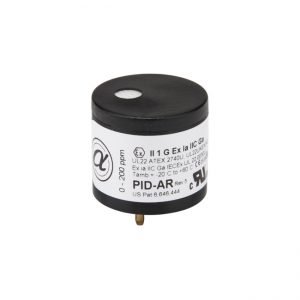
PID-AR5 Key Features & Benefits
The mid-range PID-AR5 VOC sensor is a simple plug-and-play component that provides a dynamic and reliable response to thousands of volatile organic compounds across diverse applications.
-
Designed for Versatility: Optimized for both diffusion and pumped sampling, offering excellent response time and clearance rates.
-
Stable & Long-Lasting: Features a lamp with exceptional brightness and stability for reliable long-term detection of weak and hard-to-detect compounds.
-
Robust Design: Built with humidity resistance and a contamination-resistant design.
-
Maintenance-Friendly: Includes a removable, pneumatically sealed grid.
-
Long Service Life: Comes with a 12-month warranty (excluding lamp and grid) and an expected operational lifespan of over 5 years.
Conclusion
Adhering to VOC testing regulations is critical for lubricant manufacturers and users. Portable PID analyzers, equipped with sensors like the Alphasense PID-AR5, provide a reliable, fast, and accurate method for on-site VOC detection, ensuring safety, compliance, and environmental protection.