Pollen allergies have become increasingly common worldwide, especially during the spring season. In many regions, a significant portion of the population experiences symptoms such as sneezing, runny nose, and itchy eyes. In more severe cases, prolonged exposure to pollen can even trigger asthma or other respiratory conditions.
Because of this, reducing exposure to airborne allergens is essential. However, effective prevention depends on one key factor: knowing when and where pollen levels are high. This is where airborne pollen detection plays a critical role.
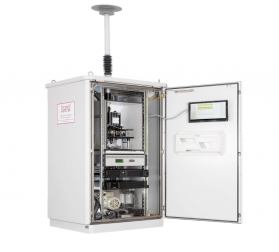
Why Monitoring Airborne Pollen Matters
Pollen particles typically range between 10 and 40 micrometers in size, making them detectable with the right sensing technology. Their concentration in the air is not constant—it changes with seasons, weather conditions, and local vegetation.
Without reliable monitoring, individuals and healthcare providers are left reacting to symptoms rather than preventing them. Accurate, real-time data allows people to plan ahead, whether that means limiting outdoor activity or adjusting medical treatment.
In recent years, this need has driven the adoption of automated pollen monitoring systems across environmental and healthcare applications.
The Shift Toward Automated Pollen Monitoring
Traditional pollen monitoring methods often rely on manual sampling and laboratory analysis. While effective, these approaches are time-consuming and cannot provide real-time insights.
Modern monitoring systems, on the other hand, are designed to continuously measure airborne particles and deliver instant data. Many of these systems are now connected to cloud platforms, allowing users to access pollen information through mobile apps or online dashboards.
This shift toward automation is transforming how pollen data is collected, analyzed, and used in both public health and environmental management.
OPC-N3: A Versatile Particle Sensor for Pollen Detection
The OPC-N3, officially known as:
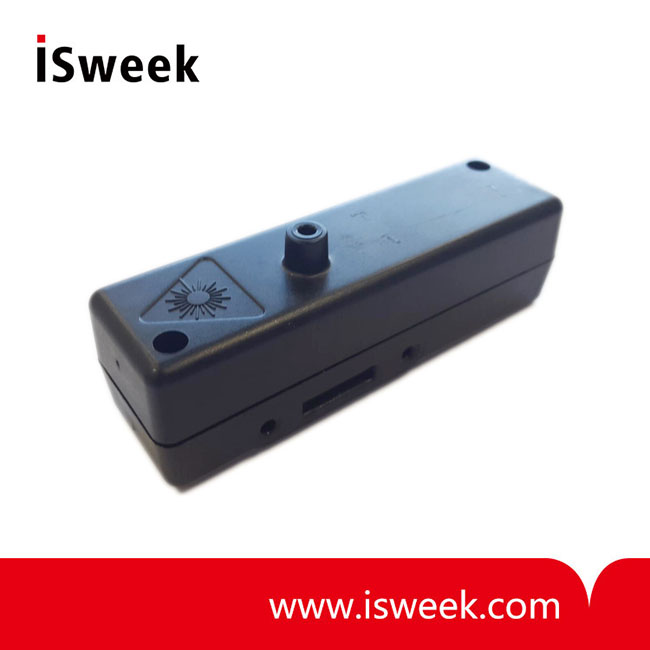
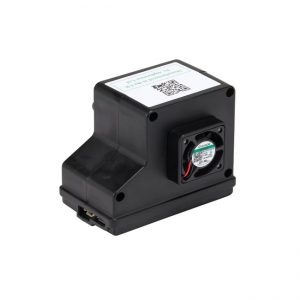
PM2.5 Particle Sensor Dust Sensor Laser Sensor Atmospheric Particle Monitors – OPC-N3
is a laser-based particle sensor developed for high-resolution air quality monitoring.
Although it is widely used as a PM2.5 particle sensor, its capabilities extend far beyond traditional air pollution measurement. Thanks to its wide detection range—from 0.38 to 40 micrometers—it can effectively capture particles within the typical size range of pollen.
This makes the PM2.5 sensor OPC-N3 a practical and efficient solution for airborne pollen detection, especially in systems that require both particulate matter monitoring and biological particle tracking.
How OPC-N3 Improves Pollen Monitoring Accuracy
What sets the PM2.5 sensor OPC-N3 apart is not just its detection range, but the level of detail it provides.
Instead of simply reporting overall particle concentration, the sensor analyzes particles across 24 size channels. This allows for a more refined understanding of particle distribution in the air, which can help distinguish between different types of pollutants—including pollen.
In addition, the use of laser-based sensing improves measurement precision, making it suitable for applications where data reliability is critical.
Integration and Real-World Applications
Another advantage of the PM2.5 sensor OPC-N3 is how easily it can be integrated into larger monitoring systems.
It supports real-time communication through SPI, allows firmware updates via Micro USB, and can store data locally using a Micro SD card in CSV format. These features make it adaptable to a wide range of use cases.
In practice, the sensor is commonly used in air quality monitoring networks, allergy alert systems, and environmental research projects. Its ability to provide continuous, high-resolution data makes it particularly valuable in scenarios where both accuracy and responsiveness are required.
Conclusion
As pollen-related allergies continue to rise, the demand for accurate and accessible monitoring solutions is growing rapidly. Real-time data is no longer a luxury—it is becoming a necessity for both individuals and public health systems.
The PM2.5 sensor OPC-N3 offers a balanced combination of precision, flexibility, and reliability. By covering the full size range of airborne pollen and providing detailed particle analysis, it serves as a powerful tool for modern environmental monitoring.
For applications that require both air quality measurement and pollen detection, the OPC-N3 stands out as a practical and future-ready solution.