In the oil and gas, petrochemical, natural gas distribution, and coal mining industries, accurate combustible gas leak detection is one of the first lines of defense for protecting personnel, equipment, and continuous operations. Traditional catalytic combustion sensors have been widely used for combustible gas detection, but their susceptibility to poisoning, relatively limited service life, and inconsistent response under complex operating conditions can create ongoing challenges for industrial users.
As industrial gas monitoring moves toward greater reliability, lower maintenance, and more intelligent monitoring, optical sensing technologies are becoming increasingly important. The PrimePELL infrared gas sensor from UK-based Clairair uses non-dispersive infrared (NDIR) technology to provide a different approach to methane and hydrocarbon detection. NDIR methane sensing measures infrared absorption rather than relying on a catalytic chemical reaction, making it well suited to demanding industrial environments.
How Does an Infrared Methane Sensor Work?
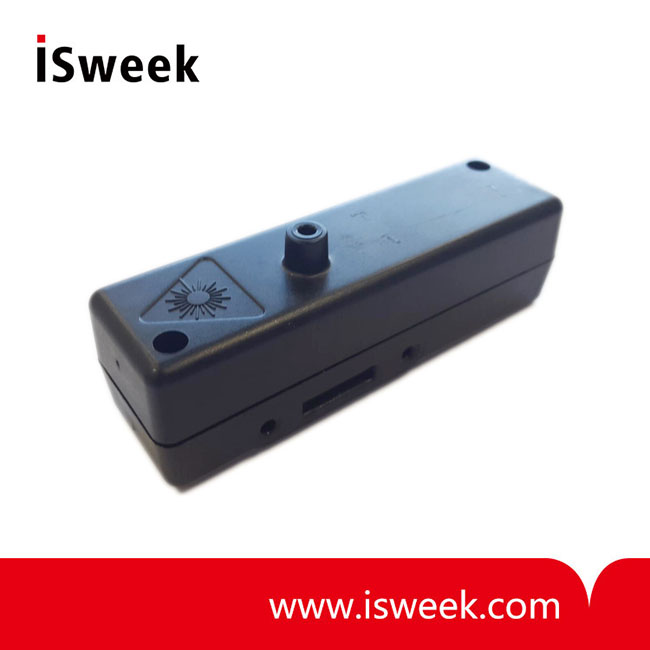
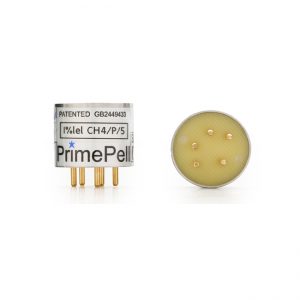
The PrimePELL sensor integrates an infrared radiation source, a customized dual-element infrared detector, and a unique optical waveguide structure. Gas enters the waveguide through diffusion, allowing the infrared radiation emitted by the source to interact sufficiently with the gas being measured. The dual-element detector then measures the infrared intensity of both the measurement channel and the reference channel.
This optical configuration is fundamental to NDIR gas sensing. Methane absorbs infrared radiation at characteristic wavelengths, and the sensor can determine gas concentration by analyzing the change in infrared intensity as the light passes through the gas sample. Reference-channel measurement can also help compensate for changes associated with the light source and surrounding conditions, contributing to more stable long-term measurements.
Compared with technologies that depend on chemical reactions, infrared sensing uses an optical measurement process. This difference becomes particularly valuable in oil and gas facilities, where the gas mixture and surrounding environment can be challenging for conventional catalytic sensing technologies.
Why Choose an Infrared Methane Sensor Instead of a Catalytic Sensor?
Traditional catalytic combustion sensors measure combustible gases through an oxidation reaction on a catalytic bead. The resulting heat change is used to determine gas concentration. However, the catalytic element can be vulnerable to poisoning caused by compounds containing sulfur, phosphorus, silicon, lead, halogens, and other contaminants. This is particularly relevant in complex environments such as petroleum refining, petrochemical processing, and natural gas distribution.
When the air in an application contains substances that can poison catalytic combustion detection elements, infrared gas detection can be a more suitable approach. For this reason, infrared sensing has become an important option for combustible gas monitoring in challenging industrial environments.
PrimePELL uses a physical optical detection principle rather than a chemical reaction, making it highly resistant to poisoning by many toxic or harmful substances. This allows the sensor to operate reliably for extended periods in environments containing sulfur- or silicon-based contaminants while potentially reducing sensor replacement frequency and maintenance requirements compared with conventional catalytic combustion sensors.
The long-term stability of NDIR technology is one of its key advantages for industrial methane leak detection. Research and industry applications have demonstrated the use of NDIR methane sensors in applications ranging from natural gas pipeline leak monitoring to industrial safety and gas concentration measurement.
High-Resolution Methane Detection from %LEL to %Vol
PrimePELL can be configured as a high-resolution methane sensor covering both 0–100% LEL and 0–100% Vol within a single sensor. Its resolution is 0.01% by volume, and when the reading exceeds 10% by volume, the resolution automatically switches to 0.1% by volume.
This dual-range capability is particularly useful in applications where both low-concentration warning and high-concentration measurement are required. For example, methane monitoring in coal mine gas extraction, biogas systems, natural gas facilities, and other industrial environments may require a sensor to operate across a wide concentration range.
In practical methane leak detection, the ability to monitor both combustible-gas risk and high methane concentrations can make a sensor more versatile for equipment manufacturers and system integrators. It also allows one sensing platform to support different stages of a gas monitoring process, from detecting a developing leak to measuring a significantly elevated concentration.
Infrared Methane Sensor Applications in the Oil and Gas Industry
Methane Leak Detection in Refinery and Petrochemical Process Areas
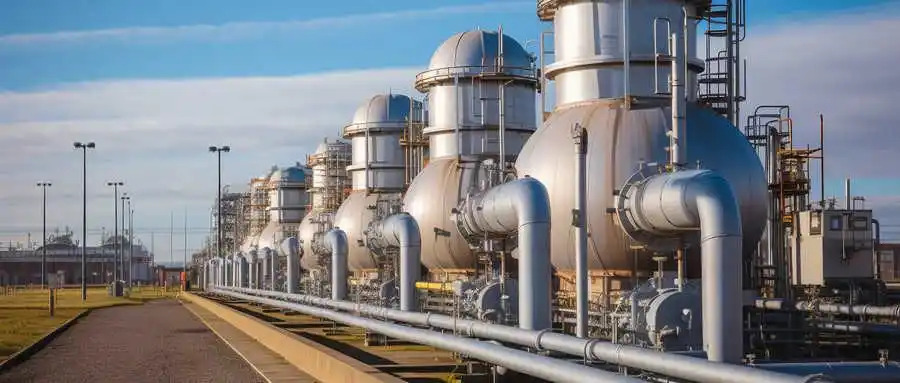
Refineries and chemical plants contain numerous high-risk areas where combustible gas leaks may occur. Reactors, distillation towers, storage tanks, valves, flanges, and other process equipment can handle hydrocarbon mixtures ranging from methane to heavier components such as naphtha.
In these environments, fixed combustible gas detectors equipped with PrimePELL can be installed at critical monitoring points. Because PrimePELL provides similar %LEL response characteristics for multiple hydrocarbons, it can continue to provide a useful indication of the actual explosion hazard even when the composition of a leaking gas is unknown or changes over time.
This characteristic can be especially valuable in process areas where the gas composition may not remain constant. Instead of relying solely on the expected composition of a process stream, an infrared methane sensor can provide continuous information about the combustible gas environment around critical equipment.
For refinery operators, this type of methane leak detection can support earlier warning and help reduce the risk of missed or inaccurate alarms caused by variations in gas response.
Wellhead and Pipeline Monitoring in Oil and Gas Production
Oil and gas production sites often operate under demanding environmental conditions. The atmosphere may contain hydrogen sulfide and other gases or contaminants that can create challenges for catalytic sensors. Field equipment may also be exposed to large day-to-night temperature fluctuations, dust, changing humidity, and other harsh conditions.
PrimePELL is designed with a wide operating temperature range of -40°C to +70°C and automatic temperature compensation to support stable output under changing environmental conditions. Its metal construction and insulated housing also provide protection against dust and moisture, helping the sensor adapt to demanding oil and gas production environments.
For wellhead, pipeline, and other outdoor monitoring applications, environmental stability is just as important as the basic ability to detect methane. A sensor that can maintain consistent performance as temperature and environmental conditions change can help reduce unnecessary maintenance and support continuous gas monitoring.
Infrared Methane Sensors for Natural Gas Distribution
Gas Leak Detection in Natural Gas Pressure Regulation Cabinets
Natural gas pressure regulation cabinets are important nodes within gas distribution networks. They regulate and stabilize system pressure while controlling gas flow. Because the internal space of a regulation cabinet is relatively confined, a gas leak can cause the methane concentration to rise rapidly toward a potentially hazardous level.
PrimePELL can be integrated into a gas leak monitoring module installed inside a natural gas pressure regulation cabinet. Its optical sensing principle provides high reliability and long service life, while integration with an intelligent cabinet monitoring system can enable continuous monitoring and real-time warning of natural gas leaks.
The combination of an NDIR methane sensor and an intelligent monitoring system can also provide a practical foundation for connected gas infrastructure. Sensor data can be transferred to control systems for alarm management, maintenance decisions, and remote monitoring.
Methane Leak Detection for Urban Gas Pipelines and Portable Instruments
Underground urban natural gas pipelines are critical infrastructure for modern cities. However, aging pipelines and difficult-to-access sections can make manual inspection challenging and inefficient. Continuous or portable methane leak detection can therefore play an important role in improving inspection efficiency while helping protect people, property, and the environment.
PrimePELL can be integrated into handheld gas detectors or unmanned aerial vehicle (UAV) systems for inspection applications. Its low-power design, with a typical current consumption of 80 mA, can help handheld equipment support extended periods of operation.
The sensor’s automatic dual-range switching between 0–100% LEL and 0–100% Vol allows it to support both low-concentration leak inspection and high-concentration measurement in confined spaces. This broad measurement capability can be particularly useful for field technicians who need to move between different inspection environments without changing sensing technologies.
PrimePELL’s automatic drift correction and automatic zero adjustment functions further help maintain measurement stability during long-term use. For portable gas detection equipment, these features can reduce the impact of sensor drift and changing operating conditions, supporting more consistent methane leak detection in the field.
NDIR methane sensing has also been investigated for portable methane detectors and underground natural gas pipeline leak detection, demonstrating the broader suitability of infrared technology for both industrial and field-based methane monitoring.
Why NDIR Technology Matters for Modern Gas Monitoring
Methane detection is no longer limited to a single type of fixed gas detector. Depending on the application, industrial users may need fixed-point monitoring, portable inspection, pipeline surveillance, process monitoring, or integration into automated equipment.
An NDIR methane sensor can provide a strong foundation for these systems because its measurement principle is based on optical absorption rather than catalytic oxidation. In applications where sensor poisoning, long-term stability, environmental variation, and maintenance requirements are major concerns, this difference can be particularly valuable.
It is also important to distinguish point-type infrared gas sensors from optical gas imaging systems. Point sensors measure the gas concentration at a specific sampling location, while optical gas imaging can visualize methane leaks across an area. Both approaches can contribute to oil and gas methane monitoring, but they address different detection requirements. Optical gas imaging, for example, is increasingly used for continuous or remote methane leak monitoring in oil and gas facilities.
For equipment manufacturers and system integrators, the appropriate technology should therefore be selected according to the required measurement range, installation environment, response characteristics, maintenance strategy, and system architecture.
Conclusion: More Reliable Methane Detection for Oil and Gas Applications
From petroleum refining and petrochemical processing to natural gas distribution, pipeline inspection, and portable field detection, accurate combustible gas monitoring is essential for industrial safety and operational reliability.
The PrimePELL infrared gas sensor provides an optical alternative to traditional catalytic combustion sensing. Its NDIR-based measurement principle, resistance to poisoning, wide operating temperature range, automatic temperature compensation, dual measurement ranges, low power consumption, and automatic drift and zero correction functions make it suitable for a variety of demanding methane monitoring applications.
For refinery process areas, oil and gas wellheads, pipelines, natural gas pressure regulation cabinets, and portable inspection equipment, an infrared methane sensor can provide a practical way to strengthen methane leak detection while supporting long-term system stability.
As oil and gas facilities continue to move toward smarter monitoring, remote inspection, and more automated safety systems, reliable methane sensing will remain an important part of industrial gas detection infrastructure. Choosing the right NDIR methane sensor is therefore not simply a matter of detecting methane—it is about building a more stable, responsive, and maintainable gas monitoring system.