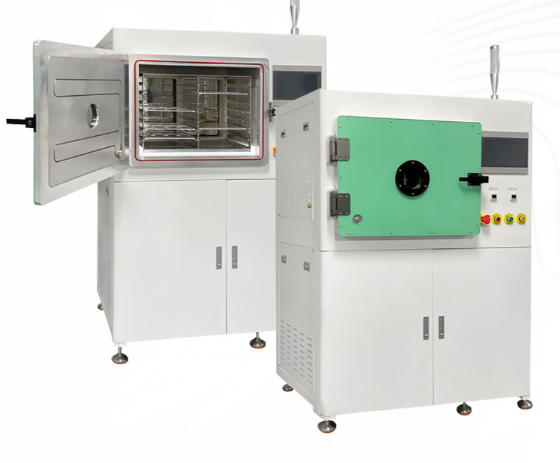
Ovens are widely used in both commercial and industrial applications. Commercial ovens are primarily designed for baking and cooking food, with steam heating being an important method in many modern steam ovens. Industrial ovens, on the other hand, are a type of drying and curing equipment. They typically use electric heating tubes to generate heat for drying, curing, aging, heating, or other production processes.
The main purpose of industrial ovens is to shorten production cycles, improve energy efficiency, and maintain consistent product quality. Depending on the application, accurate temperature and humidity control can be just as important as the heating system itself.
How Are Ovens Classified?
Ovens can be classified according to their performance, industry, operating temperature, and air circulation method.
1. By performance
Common types include:
- Steam ovens
- High-temperature ovens
- Clean ovens
- Hot-air circulation ovens
- Vacuum ovens
- Oxidation-free ovens
- Nitrogen-filled ovens
Each type is designed for a particular processing environment. For example, vacuum ovens are commonly used when drying must be carried out under reduced pressure, while nitrogen-filled or oxidation-free ovens are useful when the material needs to be protected from excessive exposure to oxygen.
2. By industry
Industrial ovens are designed for different sectors and production processes, including:
- Ovens for food processing
- Ovens for instrumentation and electronics
- Ovens for plastics and rubber
- Ovens for wood processing
- And other specialized industrial applications
3. By operating temperature
The temperature range is another important way to classify ovens:
- Low-temperature ovens — below 100°C: Generally used for electrical product aging, slow drying of conventional materials, and drying certain food ingredients, plastics, and other products.
- Normal-temperature ovens — 100–300°C: One of the most common ranges, used for food baking, coating curing, heating, warming, and thermal treatment.
- High-temperature ovens — 300–600°C: Used for drying special materials, heating components for assembly, high-temperature material testing, and chemical processing.
- Ultra-high-temperature ovens — 600–1200°C: Used for high-temperature drying of special materials, heat treatment of components, high-temperature testing, and other demanding industrial processes.
4. By air circulation method
Ovens can also be designed according to how heated air is circulated:
- Horizontal airflow: Suitable for objects placed on trays or shelves.
- Vertical airflow: Suitable for objects placed on racks or mesh shelves.
As oven temperature increases, controlling the atmosphere inside the chamber becomes increasingly important. In applications involving steam, drying, curing, fermentation, or oxidation-sensitive materials, humidity and oxygen levels can provide valuable information about the actual process conditions.
Why Is Humidity Measurement Difficult in High-Temperature Ovens?
In many existing commercial and industrial high-temperature ovens, humidity sensors are installed directly inside the oven chamber to collect humidity data and automatically adjust the humidity level.
The main problem is that conventional humidity sensors may remain exposed to high temperature and high humidity for long periods. This can significantly shorten sensor life, resulting in frequent sensor replacement and increased maintenance costs.
Another approach is to install a humidity measurement device near the oven exhaust. However, this can interfere with steam discharge from an electric steam oven. In addition, a more complicated measurement structure may result in less accurate humidity readings.
This creates an important engineering question: How can humidity be measured continuously and accurately without exposing a conventional humidity sensor to the most demanding conditions inside the oven?
One solution is to measure oxygen concentration and use it to calculate water vapor concentration.
SST Technology for High-Temperature Oven Humidity Measurement
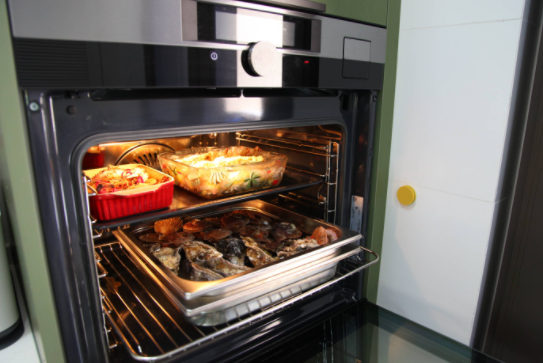
SST’s high temperature oxygen sensor technology has already been successfully applied to humidity measurement in commercial and domestic steam ovens.
The basic concept is relatively simple. Instead of directly measuring humidity with a conventional relative-humidity sensor, an SST high-performance zirconia O2 sensor measures oxygen concentration. The customer can then use appropriate equations in the control software to calculate the amount of water vapor present in the oven atmosphere.
This approach is particularly suitable when the oven atmosphere contains only fresh air and water vapor.
The underlying principle is based on oxygen displacement. When water vapor is introduced into an atmosphere originally containing air, the proportion of oxygen decreases. By accurately measuring this reduction in oxygen concentration, the amount of water vapor can be calculated.
This type of indirect water-vapor measurement is also used in industrial drying applications. Zirconia oxygen probes can be installed in dryer exhaust or process gas streams, where oxygen concentration provides information about the moisture content of the process atmosphere.
Converting Oxygen Readings into Moisture by Volume (%MV)
The relationship between an oxygen reading and humidity depends on the humidity unit selected. Two commonly considered units are % moisture by volume (%MV) and % relative humidity (%RH).
What is % Moisture by Volume?
% Moisture by Volume (%MV) is one of the most intuitive ways to express water vapor concentration. Because this scale has a linear relationship with water vapor concentration, it can be convenient for display and control using a P.I.D. controller.
Another advantage is that %MV is not directly dependent on temperature in the same way as relative humidity.
For these reasons, %MV is commonly useful in food-processing applications, particularly when the goal is to control the amount of water vapor in an oven atmosphere.
%MV can be defined in two equivalent ways:
%MV = (Number of H₂O molecules per unit volume / Total number of molecules per unit volume) × 100
or:
%MV = Pw / Pt × 100
where:
Pw = partial pressure of water vapor
Pt = total pressure, normally atmospheric pressure
If the oven atmosphere is at atmospheric pressure and consists only of air and water vapor, the following equation can be used to convert the measured oxygen concentration into %MV:
%MV = ((%O₂ / 20.95) – 1) × 100
The principle is that oxygen is diluted by water vapor. Therefore, as the oxygen concentration decreases, the water vapor concentration increases.
Because atmospheric pressure can affect the calculation, a pressure sensor may also be required to accurately calculate the oxygen concentration and resulting moisture level.
Relationship Between %O₂ and %MV
For reference, the approximate relationship between oxygen concentration and moisture by volume is:
- 0% O₂ → 100% MV
- 1% O₂ → 95.2% MV
- 2% O₂ → 90.5% MV
- 3% O₂ → 85.7% MV
- 4% O₂ → 80.9% MV
- 5% O₂ → 76.1% MV
- 6% O₂ → 71.4% MV
- 7% O₂ → 66.6% MV
- 8% O₂ → 61.8% MV
- 9% O₂ → 57.0% MV
- 10% O₂ → 52.3% MV
- 11% O₂ → 47.5% MV
- 12% O₂ → 42.7% MV
- 13% O₂ → 37.9% MV
- 14% O₂ → 33.2% MV
- 15% O₂ → 28.4% MV
- 16% O₂ → 23.6% MV
- 17% O₂ → 18.9% MV
- 18% O₂ → 14.1% MV
- 19% O₂ → 9.3% MV
- 20% O₂ → 4.5% MV
- 20.95% O₂ → 0% MV
This relationship provides a practical method for estimating moisture content from oxygen measurements when the oven atmosphere meets the required assumptions.
%RH Measurement Above 100°C
If the application requires relative humidity (%RH) instead of %MV, additional information is needed.
Temperature must be measured to calculate the maximum water vapor pressure or determine the dew point. Once these values are known, %MV can be converted into %RH.
However, relative humidity is not a linear scale, and it becomes difficult to interpret at temperatures above 100°C. At atmospheric pressure, 100% RH is not physically achievable at temperatures above 100°C, even if the atmosphere were composed entirely of water vapor.
The following example illustrates why.
Temperature = 120°C
%MV = 100%
Maximum Water Vapor Pressure = 1989 mbar
Atmospheric Pressure = 1013 mbar
The relative humidity can be calculated as:
%RH = (Atmospheric Pressure / Maximum Water Vapor Pressure) × %MV
Therefore:
%RH = (1013 / 1989) × 100
%RH = 50.93%
The maximum water vapor pressure is strongly dependent on temperature. Representative values include:
- 0°C → 6.10 mbar
- 10°C → 12.27 mbar
- 20°C → 23.37 mbar
- 30°C → 42.42 mbar
- 40°C → 73.77 mbar
- 50°C → 123.38 mbar
- 60°C → 199.17 mbar
- 70°C → 311.48 mbar
- 80°C → 473.30 mbar
- 90°C → 700.73 mbar
- 100°C → 1013.17 mbar
- 110°C → 1433.61 mbar
- 120°C → 1988.84 mbar
- 130°C → 2709.58 mbar
These values demonstrate why humidity representation becomes more complicated as oven temperature rises.
Choosing the Right Humidity Unit for Oven Control
For practical oven operation, allowing users to switch intuitively between humidity measurements below and above 100°C may be the best overall solution.
Above 100°C, %RH becomes less intuitive for users, because the maximum possible relative humidity decreases as temperature increases when total pressure remains approximately atmospheric.
For example, if the oven temperature is 150°C, the maximum water vapor pressure is approximately 5 bar. For simplicity, if atmospheric pressure is assumed to be 1 bar, the maximum possible relative humidity is approximately 20%.
Under these conditions:
20% RH = 100% MV
Therefore, the oxygen sensor reading would approach 0% O₂.
At 100°C, %RH and %MV are equivalent, which makes the relationship relatively easy to understand.
Below 100°C, however, %MV may be less intuitive for users because the maximum possible moisture content decreases as temperature decreases.
For example, if the oven temperature is 60°C, the maximum water vapor pressure is approximately 0.2 bar, giving a maximum %MV of approximately 20%.
In this case:
20% MV = 100% RH
Therefore, the oxygen sensor would read approximately 80% of the normal atmospheric oxygen concentration:
20.95% × 80% = 16.76% O₂
This illustrates why the preferred humidity unit may depend strongly on the oven temperature and the way operators need to interpret the measurement.
Why Atmospheric Pressure and Temperature Matter
Atmospheric pressure can change with altitude and weather conditions. If accurate pressure compensation is required, an additional pressure measurement should therefore be considered.
One convenient option is the sensor on the OXY-LC PCB, which integrates both atmospheric pressure and temperature measurement. This allows the necessary environmental parameters to be obtained without requiring separate external pressure and temperature sensors.
SST High-Temperature Zirconia Oxygen Sensor for Oven Applications
For high-temperature humidity measurement, SST’s O2S-FR-T2 high-temperature zirconia oxygen sensor provides a suitable sensing platform.
O2S-FR-T2 High-Temperature Zirconia Oxygen Sensor
The SST O2S-FR-T2 is a high-temperature zirconia oxygen sensor with a measurement range of 0.1–100% oxygen. It can operate in environments with temperatures of up to 400°C, making it suitable for applications such as boiler combustion control, bacterial cultivation, composting, fermentation, and other industrial processes.
The rod-type zirconia oxygen sensor and oxygen probe O2S-T2/O2S-FR-T2 use two zirconia discs with a sealed space between them.
One disc functions as a reversible oxygen pump, alternately filling the small sealed space with sample gas and evacuating it. The other disc measures the ratio of the oxygen partial pressure difference and generates the corresponding sensor voltage.
When the zirconia disc operates as an oxygen pump, the required operating temperature of approximately 700°C is generated by the integrated heating element. The time required for the oxygen pump to bring the pressure in the small internal space between its rated minimum and maximum values corresponds to the oxygen partial pressure in the surrounding environment.
This operating principle allows the sensor to measure oxygen concentration without relying on a conventional consumable sensing element, making it suitable for demanding high-temperature environments.
Typical Applications of the O2S-FR-T2
The O2S-FR-T2 can be used in a wide range of oxygen measurement and process-control applications, including heating boiler control, industrial process control, aircraft oxygen-generation systems, automotive exhaust diagnostics, industrial instrumentation, medical oxygen supply equipment, industrial flues, oxygen concentration monitoring, burner oxygen monitoring, oxygen generators, submarine oxygen compartments, oxygen bars, ship compartments, controlled-atmosphere storage, food packaging protective-gas monitoring, residual oxygen measurement in fermentation processes, protective atmospheres for welding and heat treatment, laboratory equipment, biotechnology and medical oxygen testing, and other applications where accurate oxygen concentration measurement is required.
Users can supply oxygen or monitor oxygen in ambient air. They can also develop their own downstream control and signal-amplification circuits or use the original imported controller PCB designed for the sensor.
Key Features of the O2S-FR-T2
The O2S-FR-T2 uses a non-consumptive zirconia sensing element and supports an oxygen partial pressure range of 2 mbar to 3 bar.
It provides high stability and accuracy and can measure oxygen from 0 to 100%. The sensor has no cross-interference from other gases under the specified operating conditions and does not require external temperature stabilization.
An integrated heating element maintains the required sensing temperature, while the sensor is designed to tolerate gas temperatures from -100°C to 400°C, depending on the specific operating configuration and application conditions.
O2S-FR-T2 Technical Specifications
| Parameter | Specification |
| Heater voltage | 4.35 VDC ± 0.1 VDC (1.85 A) |
| Holding voltage | 2 VDC (0.85 A) |
| Pump impedance @ 700°C | <6 kΩ |
| Allowable gas temperature | -100 to 250°C |
| Gas flow rate | 0–10 m/s |
| Allowable repetitive acceleration | 5 g |
| Allowable instantaneous acceleration | 30 g |
Compatible Interface and Transmitter Boards
O2I-Flex-092 Zirconia Oxygen Sensor Interface Board
The O2I-Flex-092 interface board supplies the necessary power to the electronics and controls SST dynamic oxygen sensors. Users can configure the measurement range to 0–25% or 0–100% oxygen.
The entire measurement range is linear, with 0–25% set as the factory default. When the 0–100% range is selected, customers can customize the analog output range according to their actual application.
Available output configurations include:
4–20 mA, 0–10 VDC, or RS232.
This makes the interface board suitable for integrating the oxygen sensor into industrial control systems and process-monitoring equipment.
OXY-LC Oxygen Transmitter
The OXY-LC circuit board can supply power to and control SST’s dynamic oxygen sensors.
It is important to understand that the SST oxygen transmitter does not directly measure oxygen concentration. Instead, it measures the oxygen partial pressure in the gas.
To directly output oxygen concentration, the OXY-LC must be calibrated in air or in a gas with a known reference concentration.
Typical applications include combustion control for oil, gas, and biomass boilers; composting; laboratory and building air-quality monitoring; and oxygen monitoring for enclosed-space safety.
Conclusion
Humidity measurement in high-temperature ovens is challenging because conventional humidity sensors can suffer from reduced service life when continuously exposed to heat and steam. A measurement approach based on a high-temperature oxygen sensor provides an alternative for specific oven environments where the atmosphere consists only of fresh air and water vapor.
By measuring oxygen concentration and combining it with temperature and pressure data, the system can calculate moisture by volume and, where appropriate, convert the result into relative humidity.
For high-temperature oven applications, a zirconia oxygen sensor such as the SST O2S-FR-T2 can provide a durable sensing solution for demanding environments. Its wide oxygen measurement range, integrated heating element, and ability to operate under high-temperature conditions make it suitable for industrial process control and other applications where conventional humidity sensors may have difficulty maintaining long-term performance.
For applications requiring humidity measurement above and below 100°C, the choice between %MV and %RH should be considered carefully. In many high-temperature processes, %MV provides a more intuitive and practical way to represent moisture content, while pressure and temperature measurement can further improve the accuracy of the calculation.