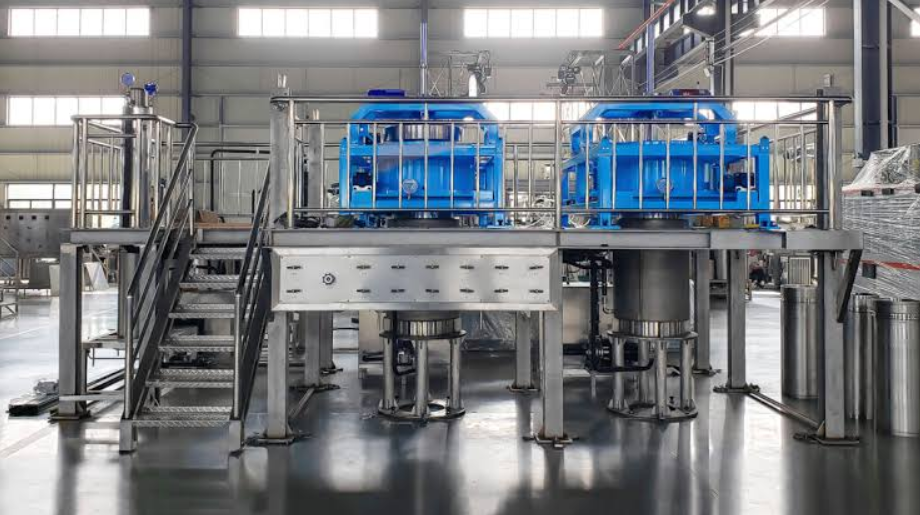
Supercritical drying equipment is a specialized system designed to create and precisely control supercritical conditions for drying delicate and high-value samples. By taking advantage of the near-zero surface tension of a supercritical fluid, the process can remove liquid from a sample without causing structural collapse, deformation, or sticking that may occur with conventional drying methods.
Supercritical CO2 drying equipment is particularly useful when preserving the original microstructure of a material is critical. The technique is widely associated with aerogels, porous materials, microstructures, and other samples that can be damaged by capillary forces during conventional evaporation. Research and commercial systems commonly use liquid CO2 exchange followed by controlled heating and depressurization to achieve the drying process.
How Does Supercritical CO2 Drying Work?
The process can be understood in three main stages: liquid replacement, transition to the supercritical state, and controlled depressurization.
1. Liquid CO2 Exchange
First, liquid carbon dioxide (CO2) is introduced into the system to replace the original liquid contained in the pores of the sample, such as water or an organic solvent.
This liquid exchange step is important because the drying process is intended to remove the original pore liquid while avoiding the strong capillary forces associated with a conventional gas-liquid interface.
2. Transition to the Supercritical State
The system is then heated and pressurized until CO2 passes its critical point. For carbon dioxide, the critical temperature is approximately 31.1°C and the critical pressure is approximately 7.39 MPa.
Above these conditions, CO2 enters a supercritical state with properties between those of a liquid and a gas. It can therefore combine relatively high diffusivity with useful solvent properties.
This single-phase environment is one of the key reasons supercritical CO2 drying can preserve delicate porous structures. In supercritical drying, the absence of a conventional gas-liquid interface helps eliminate capillary pressure that can otherwise deform fragile pore networks.
3. Controlled Depressurization
Finally, the supercritical CO2 is released slowly while the process is controlled to avoid reintroducing a liquid-gas interface.
Because the drying path avoids the conventional liquid-to-gas interface, surface-tension-related structural damage can be greatly reduced. The result is a dried sample that more closely retains its original microscopic structure.
Applications of Supercritical CO2 Drying
The ability to remove liquid while preserving delicate structures makes supercritical drying useful across a range of technical fields.
Materials Science
One of the best-known applications is the production of aerogels. Supercritical drying can preserve their nanoporous network structure and reduce the risk of structural collapse.
The technology is also used for drying other porous materials, including metal-organic frameworks (MOFs), covalent organic frameworks (COFs), and catalyst supports.
Semiconductor and MEMS Manufacturing
Supercritical drying can be used for drying micro- and nanostructured devices, including MEMS components such as accelerometers.
For these structures, conventional evaporation can generate capillary forces that cause tiny features to stick together, deform, or fracture. A supercritical drying process helps avoid these effects and supports structural integrity.
Biotechnology and Pharmaceuticals
The technology can also be applied to biological samples, including cells and microorganisms, for preparation before observation with instruments such as scanning electron microscopes (SEM).
It may also be used for drying temperature-sensitive biological products, such as probiotics, as well as certain pharmaceutical products including antibiotics, where maintaining activity can be important.
Cultural Heritage Conservation
Supercritical drying can be used to dehydrate and dry waterlogged cultural artifacts, such as archaeological wood and lacquerware.
By minimizing capillary forces during drying, the process can help reduce cracking, deformation, and other damage associated with conventional drying techniques.
Key Advantages of Supercritical Drying
The main value of supercritical drying is not simply that it removes liquid. It is the way the liquid is removed.
Structural Preservation
By eliminating the conventional liquid-gas interface during the final drying stage, the process can significantly reduce surface-tension and capillary-force effects. This makes supercritical drying particularly attractive for delicate and highly porous samples.
Mild Process Conditions
CO2 has a critical temperature of only about 31°C, which is significantly lower than the critical temperature of water at approximately 374°C. This relatively low critical temperature makes CO2-based supercritical drying suitable for many heat-sensitive materials.
Efficient and Clean Drying
Supercritical CO2 combines gas-like diffusion properties with liquid-like solvent behavior. This can support efficient penetration and removal of liquids from porous structures and may help remove substances that are difficult to process using conventional drying methods.
Safety and Environmental Considerations
CO2 is non-flammable and can be recovered and reused in appropriately designed systems. These properties make supercritical CO2 an attractive processing medium for applications where solvent recovery and process efficiency are important.
At the same time, because supercritical CO2 systems operate under elevated pressure, pressure containment, sealing, process control, and safety interlocks are essential parts of equipment design.
Why is Liquid CO2 Level Detection Important?
The supercritical drying process begins with the introduction of liquid CO2 to replace the liquid originally present in the sample pores. This means the equipment needs reliable monitoring of the liquid CO2 level during the filling and process stages.
Liquid level monitoring is particularly important because an incorrect liquid level can affect the amount of CO2 available for the process and may influence the repeatability of the drying cycle.
The challenge is that the equipment may operate under conditions that are considerably more demanding than those encountered by conventional tank-level sensors. Once CO2 enters the supercritical region, the system operates above the critical temperature and pressure of carbon dioxide, creating strict requirements for the components used around the process vessel.
For this reason, a CO2 liquid level sensor or point-level switch used in the system needs to be selected according to the actual pressure, temperature, fluid compatibility, mechanical connection, and installation environment.
In practical equipment design, liquid-level detection can serve as part of the process-control and safety architecture, helping verify whether sufficient liquid CO2 is present and supporting actions such as filling, draining, pump control, or process interlocking.
Challenges in Liquid CO2 Level Monitoring
Unlike ordinary water or oil storage tanks, a supercritical CO2 drying system combines liquid handling, elevated pressure, temperature changes, and phase transitions in a single process.
The liquid-level sensing solution therefore needs to maintain reliable switching performance while withstanding the mechanical and thermal conditions around the vessel.
The sensor’s mounting arrangement is also important. Depending on the equipment design, threaded connections, electrical outputs, sensor orientation, sealing method, and material compatibility all need to be considered before installation.
For equipment manufacturers, the goal is not simply to add a liquid-level switch. The sensor should become part of a reliable process-control architecture that supports repeatable CO2 filling and safe operation.
Recommended Liquid Level Switch for Supercritical CO2 Drying Equipment
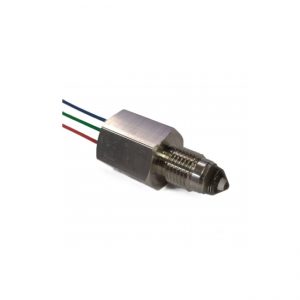
For liquid CO2 level detection, ISweek recommends SST’s LLHR liquid level switch from the Optomax Industrial Glass Series.
The Optomax Industrial Glass family is designed for demanding industrial liquid-level applications and uses a durable glass sensing tip with a 316L stainless-steel housing. SST’s current product documentation identifies the series as a liquid-level switch family intended for applications including level control, leak detection, tank filling/emptying, pump control, and overfill protection.
The LLHR series offers multiple mounting-thread and output configurations, making it easier to adapt the switch to different equipment designs.
For the configuration referenced in this application, the sensor is specified for pressure resistance of up to 10 MPa and stable operation from -25°C to 80°C. Its robust housing and specialized encapsulation help reduce the risk of leakage under high-pressure operating conditions.
Because supercritical drying systems can involve significant pressure and temperature changes, a compact point-level sensing solution with appropriate mechanical protection can be useful for monitoring the presence or absence of liquid CO2 during the filling process.
Why the LLHR Series Fits This Application
The main advantage of the LLHR approach is its focus on reliable point-level detection under demanding industrial conditions.
Its metal housing, selectable mounting arrangements, and output options provide flexibility when integrating the switch into a custom supercritical CO2 drying equipment design. The glass sensing element also provides a durable interface for liquid detection in harsh environments. The broader Optomax Industrial Glass series is documented for high-pressure and high-temperature industrial applications and uses 316L stainless steel with a glass tip.
For equipment designers, this type of sensor can be used as a process-status signal rather than as a continuous liquid-level transmitter. For example, the detected liquid state can be incorporated into a control sequence that determines whether the system should continue filling, proceed to the next process stage, or generate an alarm.
Integrating CO2 Level Detection into the Drying Process
A reliable CO2 liquid level sensor is most effective when integrated with the rest of the drying system rather than treated as an isolated component.
A typical control architecture may combine liquid-level detection with pressure monitoring, temperature measurement, CO2 flow control, valves, pumps, alarms, and safety interlocks.
During filling, the level switch can confirm that liquid CO2 has reached the required point. Pressure and temperature sensors can then provide additional information about the operating state of the system.
As the process transitions from liquid CO2 handling to supercritical operation, the equipment control system can use these measurements to manage heating, pressure regulation, and controlled depressurization.
This combination of sensing and process control helps improve repeatability while providing additional protection against abnormal operating conditions.
Conclusion
Supercritical CO2 drying provides an effective way to dry delicate and porous materials while reducing the structural damage caused by surface tension and capillary forces. Its applications range from aerogels and advanced porous materials to semiconductor and MEMS structures, biological samples, pharmaceuticals, and cultural heritage conservation.
The process begins with liquid CO2 exchange and requires precise management of pressure and temperature as CO2 approaches and passes its critical point. Because liquid CO2 must be supplied and controlled during the process, liquid CO2 level detection is an important part of the equipment architecture.
For system designers, selecting an appropriate CO2 liquid level sensor requires careful consideration of pressure resistance, temperature range, mounting configuration, material compatibility, and switching requirements.
SST’s LLHR metal-housing liquid level switch from the Optomax Industrial Glass Series provides a compact point-level detection option for demanding industrial environments. With flexible connection and output configurations and a robust metal-and-glass construction, it can be considered for integration into supercritical CO2 drying equipment where reliable liquid-level status detection is required.
The final sensor selection should always be validated against the actual CO2 phase, pressure, temperature, materials, and installation conditions of the specific drying system.