As the global energy transition accelerates, hydrogen is becoming a key component of modern energy systems. However, alongside its advantages, hydrogen leak detection has become a critical requirement in fire protection and safety management.
Introduction
According to global energy transition reports, under current development trends, global electricity demand is expected to double by 2050 compared to 2024. At present, power generation accounts for approximately 40% of energy-related carbon emissions. Therefore, decarbonizing power generation systems is essential to limit global warming within 2°C.
To achieve carbon neutrality and peak carbon goals, carbon emissions in the power sector must be reduced by at least 85% by 2050 compared to 2012 levels. This requires renewable energy to account for approximately 63% of total power generation. However, renewable energy suffers from unstable output and cannot reliably cover base load demand, which means additional high-power generation systems are still required when renewable sources are unavailable. Energy storage technologies can effectively reduce the demand for continuous power generation capacity.
In addition to battery storage, hydrogen energy storage is another highly competitive development direction. Hydrogen energy storage refers to converting surplus electricity into hydrogen, which can be stored indefinitely and later used in conventional gas power plants or for residential heating.
The advantage of converting electricity into hydrogen lies in its high efficiency. Electrolysis can currently achieve up to 80% energy conversion efficiency. Moreover, hydrogen offers flexible utilization pathways and supports large-scale, long-duration energy storage. Hydrogen storage technologies can be further divided into two types:
- Power-to-Power (PtP): converting electricity into another form of energy for storage and converting it back into electricity when needed.
- Power-to-Gas (PtG): converting electricity into gas, typically hydrogen, which can be injected into natural gas pipelines or converted into methane.
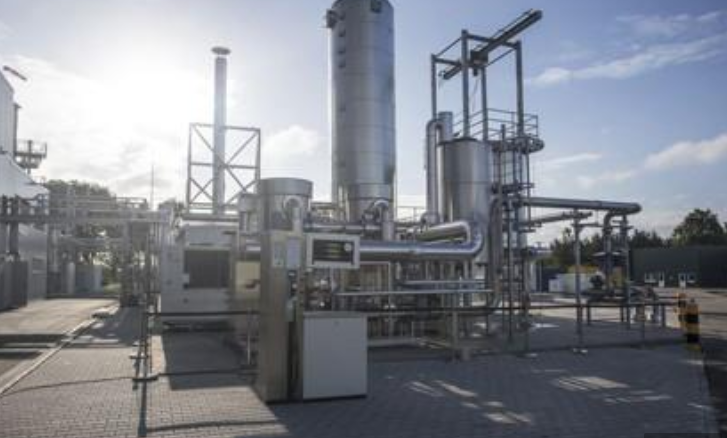
Hydrogen Applications and Fire Safety Challenges
Hydrogen fuel cells convert chemical energy into electrical energy through electrochemical reactions, producing only water as a byproduct. While hydrogen energy has wide applications, it also presents fire and explosion risks. Therefore, fire protection in hydrogen energy storage containers is extremely important.
This article proposes a fire protection solution for hydrogen-powered battery containers, including automatic fire suppression systems, fire alarm systems, and fire detectors.
The working principle of hydrogen fuel cells relies on components such as the anode (H₂), cathode (O₂), and electrolyte. Through electrochemical reactions, chemical energy from hydrogen is directly converted into electricity.
As long as fuel (hydrogen) and oxidizer (air or pure oxygen) are continuously supplied, the fuel cell can continuously generate electricity, with water as the only byproduct.
Hydrogen is widely used in aerospace, new energy vehicles, and industrial production. In laboratory catalytic research, hydrogen is also commonly used in a laboratory hydrogenation reactor under elevated pressure, where proper ventilation and hydrogen leak monitoring are important parts of laboratory safety. However, due to its high flammability and explosion risk, fire protection in hydrogen energy storage containers must be carefully designed and implemented.
Fire Characteristics and Explosion Risks of Hydrogen
1. Frequent Fire Incidents
Hydrogen has high combustion performance and burns rapidly. Once a hydrogen leak occurs and encounters an ignition source, fire is likely to occur. In air, hydrogen combustion forms flames that are often difficult to detect and can reach high temperatures, posing serious threats to life and property.
2. Difficulty in Fire Suppression
Hydrogen can form flammable mixtures within a wide concentration range. When mixed with air at concentrations between 4% and 75%, it becomes highly explosive. Once ignition occurs, explosions can easily happen, making fire suppression particularly challenging.
Fire Protection System Design for Hydrogen Storage
1. Hydrogen Battery Container Fire Suppression Solution
Hydrogen energy storage containers mainly consist of two parts: the prefabricated battery cabin and the power distribution room. These include components such as containerized equipment rooms, battery packs, battery management systems, power converters, and fire protection systems.
The power distribution room houses electrical cabinets and inverters to control the electrical system. Gas fire suppression control panels and combustible gas alarm devices are installed according to the structure of the container. These systems are typically installed in the distribution room, with pipelines extending to other compartments.
2. Fire Detectors
Fire detectors should be installed in designated zones according to design specifications and standards. In battery rooms, explosion-proof smoke detectors, heat detectors, and hydrogen detectors should be installed with explosion-proof ratings such as Exd IIC T6 Gb.
In the power distribution room, smoke and heat detectors are installed, while temperature-sensing cables are used in cable channels.
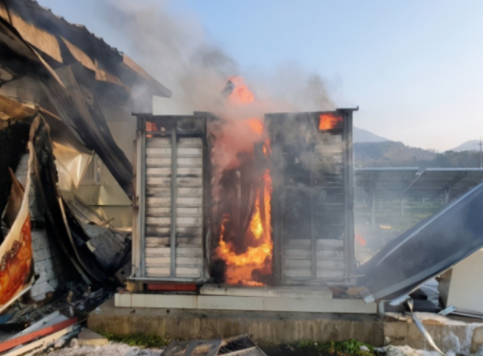
The Role of Hydrogen Gas Sensors in Fire Protection
In hydrogen energy systems, hydrogen gas sensors are essential for effective hydrogen leak detection. By continuously monitoring hydrogen concentration, these sensors provide early warnings before dangerous conditions develop, significantly reducing fire and explosion risks.
Recommended Hydrogen Detection Module
ISweek‘s hydrogen sensor plays a crucial role in the field of energy storage fire protection due to its excellent performance and wide range of applications. It can provide a complete solution for addressing the frequent occurrence of safety incidents in energy storage systems.
Especially in scenarios where lithium batteries experience thermal runaway and generate large amounts of hydrogen and other characteristic gases, it provides strong protection for energy storage safety.
With continuous technological advancement, ISweek will keep optimizing its products to deliver more comprehensive safety protection solutions for the energy storage fire protection field.
ISweek recommends the semiconductor hydrogen sensor AG-2-H2-MA2616(D). The AG-2-H2-MA2616(D) is an embedded module based on the semiconductor sensing principle, featuring fast response, low power consumption, and compact size.
The module integrates a newly developed sensing element, which is minimally affected by interfering gases such as alcohol, while maintaining high selectivity to hydrogen. It is highly suitable for detecting changes in hydrogen concentration.
It can detect hydrogen concentrations in the range of 10–3000 ppm.
This makes it suitable for hydrogen leak detection applications in energy storage and fire protection systems.

Conclusion
Hydrogen energy plays a vital role in the global energy transition, but its associated safety risks cannot be ignored.
By implementing comprehensive fire protection systems and integrating reliable hydrogen gas sensors, effective hydrogen leak detection can be achieved, significantly reducing the risk of fire and explosion.
As hydrogen applications continue to expand, advanced detection technologies will become increasingly important for ensuring safety in energy storage and industrial systems.