Thin film deposition is one of the most critical manufacturing steps in the semiconductor industry. Whether producing insulating layers such as silicon dioxide, semiconductor materials such as polysilicon, or conductive metal films like copper, precise process control is essential for achieving consistent device performance.
Among the various deposition technologies available today, Chemical Vapor Deposition (CVD) remains one of the most widely used methods in semiconductor fabrication. As device geometries continue to shrink and process requirements become more demanding, accurate gas delivery has become increasingly important. This is where a Mass Flow Controller (MFC) plays a vital role.
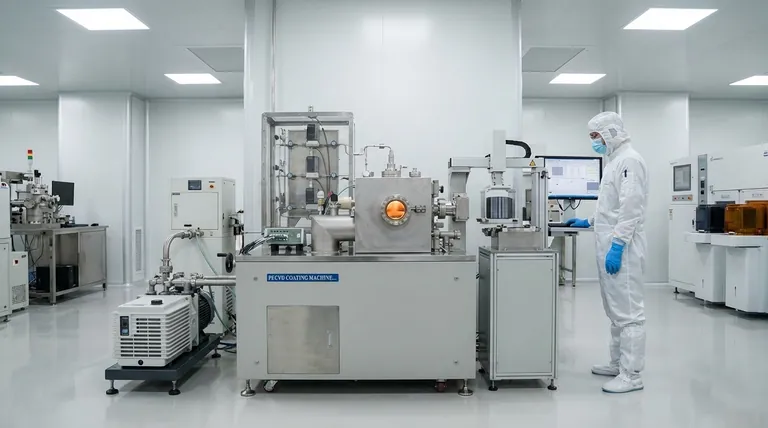
Understanding Chemical Vapor Deposition (CVD)
Chemical Vapor Deposition (CVD) is a thin-film manufacturing process in which gaseous or vaporized precursor materials react on or near a heated substrate surface to form a solid film.
Compared with Physical Vapor Deposition (PVD), CVD offers excellent film conformity, uniformity, and scalability, making it a preferred technology for many semiconductor applications.
A typical CVD process consists of three key stages:
- Diffusion of reactive gases toward the substrate surface
- Adsorption of gas molecules onto the substrate
- Chemical reactions that form solid deposits while releasing gaseous byproducts
Common CVD reaction mechanisms include:
- Thermal decomposition reactions
- Chemical synthesis reactions
- Chemical transport reactions
Because these reactions depend heavily on gas concentration and flow stability, precise gas flow management is essential throughout the deposition process.
Gas Flow Requirements in Semiconductor CVD Processes
In semiconductor manufacturing, CVD systems typically utilize one or more precursor gases that react inside the process chamber to form thin films on silicon wafers.
Depending on the application, different CVD technologies may be used, including:
- Thermal CVD
- Plasma-Enhanced CVD (PECVD)
- Metal-Organic Chemical Vapor Deposition (MOCVD)
Common process gases include:
- Silicon dioxide precursors
- Chlorosilanes
- Trimethylsilane (TMS)
- Trichlorosilane (TCS)
- Nitrogen (N₂)
- Ammonia (NH₃)
- Hydrogen (H₂)
Each gas must be delivered at a precisely controlled flow rate to ensure process stability, film uniformity, and repeatable production results.
Even small fluctuations in gas flow can affect:
- Film thickness
- Deposition uniformity
- Surface quality
- Process yield
Gas Delivery Challenges in MOCVD Systems
A typical MOCVD system illustrates the importance of accurate flow control.
Liquid metal-organic precursors stored in dedicated source vessels are gently heated, bubbled, or vaporized to generate precursor gases. These gases are then transported into the MOCVD reactor using high-purity carrier gases, typically nitrogen or hydrogen.
The transfer line temperature must be carefully controlled to prevent precursor condensation or premature reactions before entering the reactor chamber.
Inside the reactor, precursor gases are mixed with high-purity reactant gases and delivered through specially designed manifolds that ensure uniform gas distribution across the heated substrate surface. This uniform distribution is critical for achieving consistent film thickness and material properties.
In such environments, reliable mass flow control directly impacts deposition quality and process repeatability.

Why Mass Flow Controllers Are Critical in CVD Equipment
Precise Flow Control
Mass Flow Controllers (MFCs) are widely used to measure and regulate gas flow rates in semiconductor processing equipment.
In CVD systems, MFCs ensure that the correct amount of process gas enters the reaction chamber at all times. Accurate flow control is essential for maintaining consistent reaction conditions and achieving precise film thickness.
Without proper flow regulation, variations in gas delivery can lead to non-uniform deposition and reduced product quality.
Real-Time Process Monitoring
In addition to flow regulation, MFCs continuously monitor gas flow conditions during operation.
This real-time monitoring capability helps identify abnormal process conditions, equipment faults, or gas supply issues before they affect production quality.
As a result, manufacturers can improve process consistency while reducing downtime and maintenance costs.
Automated Process Control
Modern MFCs support programmable flow profiles and automated process integration.
By automatically adjusting gas flow rates according to predefined recipes, MFCs enable higher levels of process automation, improved production efficiency, and reduced operator error.
This capability is particularly important in advanced semiconductor manufacturing environments where repeatability and precision are critical.
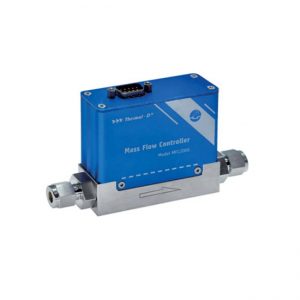
MFC2000 Series Mass Flow Controller for CVD Applications
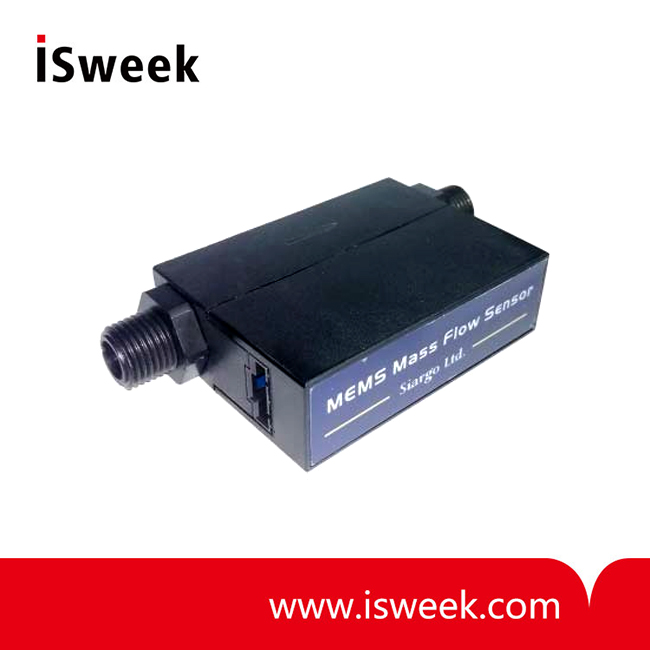
For semiconductor gas delivery systems, ISweek offers the SIARGO MFC2000 Series Mass Flow Controller, designed for high-precision industrial flow control applications.
The MFC2000 Series utilizes SIARGO’s proprietary MEMS Thermal-D thermal sensing technology combined with intelligent control electronics.
Unlike conventional flow measurement technologies, this advanced sensing approach minimizes sensitivity to gases with similar diffusion characteristics and allows gas identification after programming.
Key performance specifications include:
- Dynamic range up to 100:1
- Operating pressure range: 0.1–0.8 MPa (15–120 PSL)
- Temperature compensation range: 0–50°C
- Flow ranges from 50 mL/min to 200 L/min
- Digital RS485 Modbus communication
- Analog output options
The modular design also simplifies installation and maintenance. Standard fitting options include:
- Double ferrule fittings
- VCR fittings
- UNF fittings
Customized connectors are also available upon request.
Benefits of the MFC2000 Series in Semiconductor CVD Systems
In semiconductor CVD equipment, the MFC2000 Series provides accurate gas measurement and control throughout the deposition process.
Its combination of high precision, wide flow range, and stable performance helps manufacturers achieve:
- Improved deposition uniformity
- Enhanced process repeatability
- Better film thickness control
- High-temperature process stability
- High-resolution thin-film deposition
These capabilities make the MFC2000 Series an effective solution for advanced semiconductor manufacturing and CVD process optimization.
Conclusion
As semiconductor fabrication continues to advance, precise gas flow management has become increasingly important for maintaining process quality and production efficiency.
In Chemical Vapor Deposition (CVD) systems, Mass Flow Controllers play a critical role in ensuring accurate gas delivery, process stability, and consistent thin-film deposition results.
By combining advanced MEMS sensing technology, intelligent control electronics, and flexible communication options, the SIARGO MFC2000 Series provides a reliable solution for modern semiconductor CVD applications.