Introduction
With the growing global demand for clean energy and the continuous advancement of the power industry toward higher efficiency, reliability, and environmental sustainability, hydrogen is increasingly being used in power-related applications.
Whether as a cooling medium in hydrogen-cooled generators or as a key reactant or byproduct in hydrogen fuel cells and energy storage batteries, the proper use and safety monitoring of hydrogen are crucial.
However, hydrogen is highly flammable and explosive. Once a leak occurs, it can easily lead to serious safety accidents, causing casualties and significant property losses. In this context, electrochemical hydrogen sensors, with their high sensitivity, fast response, strong selectivity, and reliable stability, have become a core technology for hydrogen monitoring in the power industry, playing an irreplaceable role in ensuring the safe and stable operation of power systems.

Hydrogen Application Scenarios in the Power Industry
1. Hydrogen-Cooled Generators
1.1 Working Principle and Role of Hydrogen
In large-scale generator units, hydrogen cooling technology is often used to improve power generation efficiency and reduce equipment temperature. Hydrogen has high thermal conductivity—approximately seven times that of air—allowing it to effectively dissipate heat generated during operation. This ensures that key components such as stators and rotors operate within a suitable temperature range.
For example, in a 1,000 MW generator unit, a water-hydrogen-hydrogen cooling system (water cooling for stator windings, hydrogen cooling for rotor windings, and hydrogen cooling for the core and end structures) significantly improves both efficiency and operational stability.
1.2 Hydrogen Leak Risks
Although generators are designed with tight sealing systems, hydrogen leak risks still exist during long-term operation due to vibration, temperature fluctuations, and component aging.
Once a leak occurs, hydrogen can mix with air to form a flammable mixture, which may explode when exposed to ignition sources or high temperatures. According to statistics, in the past five years, hydrogen leaks in hydrogen-cooled generators have caused multiple unplanned shutdowns, resulting in significant economic losses and power supply interruptions.
2. Hydrogen Fuel Cell Power Generation
2.1 Power Generation Mechanism and Advantages
Hydrogen fuel cells convert the chemical energy of hydrogen and oxygen directly into electricity through electrochemical reactions, producing only water as a byproduct. They offer significant advantages such as environmental friendliness, high efficiency (40%–60%), and low noise.
They are considered an important future direction for distributed power generation and emergency power supply. For example, in locations with extremely high reliability requirements—such as hospitals and data centers—hydrogen fuel cells can serve as backup power sources and quickly start during grid failures.
2.2 Hydrogen Concentration Monitoring Requirements
To ensure efficient and stable operation, hydrogen concentration must be precisely controlled. If the concentration is too low, efficiency decreases; if too high, safety risks increase.
Additionally, components such as pipelines and valves in fuel cell systems may also leak hydrogen. Therefore, real-time and accurate hydrogen concentration monitoring is essential for both safety and performance.
3. Energy Storage Batteries
3.1 Hydrogen Generation in Batteries
During the charging and discharging processes of various energy storage batteries (such as lead-acid and lithium-ion batteries), hydrogen may be generated due to internal electrochemical reactions.
For example, in lithium-ion batteries, overcharging, over-discharging, aging, or abnormal temperatures can trigger hydrogen evolution at the negative electrode. When hydrogen accumulates around battery packs and reaches a certain concentration, it may cause explosions if exposed to ignition sources or static electricity.
3.2 Importance of Hydrogen Monitoring
In energy storage power stations, especially large-scale centralized facilities, real-time hydrogen monitoring helps identify battery faults early and prevent accidents caused by hydrogen accumulation. This ensures stable system operation and supports grid peak regulation and backup functions.
Working Principle and Advantages of Electrochemical Hydrogen Sensors
1. Working Principle
1.1 Basic Electrochemical Process
Electrochemical hydrogen sensors operate based on electrochemical reactions. They typically consist of a working electrode, a counter electrode, and an electrolyte.
When hydrogen-containing gas reaches the working electrode, hydrogen is oxidized under the action of a catalyst, releasing electrons and forming hydrogen ions (H⁺). Electrons flow through the external circuit to the counter electrode, while hydrogen ions migrate through the electrolyte. This process generates a current proportional to hydrogen concentration.
1.2 Signal Conversion and Output
The internal circuitry amplifies and processes the weak current signal and converts it into a standard output signal (such as 4–20 mA or 0–5 V), which can be interpreted by monitoring systems to determine hydrogen concentration accurately.
2. Technical Advantages
- High Sensitivity: Capable of detecting extremely low hydrogen concentrations, with some advanced models reaching detection limits as low as 1 ppm or even lower.
- Fast Response: Typically responds within seconds, enabling early detection and timely alerts.
- Good Selectivity: Highly selective to hydrogen and resistant to interference from gases such as CO₂, CH₄, and CO.
- Strong Stability: Maintains accuracy under harsh conditions such as high temperature, humidity, and electromagnetic interference.
- Compact Structure: Small size allows flexible installation in confined spaces and supports multi-point monitoring networks.
Applications and Case Studies in the Power Industry
1. Hydrogen Monitoring in Hydrogen-Cooled Generators
1.1 Installation and Monitoring Points
Sensors are typically installed at leakage-prone areas such as seals, pipeline connections, and ventilation outlets to detect hydrogen concentration in real time.
1.2 Case Study
In a large thermal power plant, electrochemical hydrogen sensors detected abnormal hydrogen levels at a generator seal during routine inspection. Although the concentration had not reached a critical level, the issue was traced to seal wear. Timely maintenance prevented a major accident and avoided economic losses.
2. Hydrogen Monitoring in Fuel Cell Systems
2.1 Full-Process Monitoring
Sensors are deployed across hydrogen storage, transportation, and reaction processes to ensure safety and optimize performance.
2.2 Case Study
In a distributed energy project, hydrogen sensors detected abnormal fluctuations multiple times. The system adjusted hydrogen supply accordingly, ensuring stable operation and preventing potential risks.
3. Hydrogen Monitoring in Energy Storage Systems
3.1Monitoring System Design
Distributed sensors monitor hydrogen levels in battery compartments and are linked to ventilation and alarm systems.
3.2 Application Outcome
In a 200 MW energy storage station in Jiangsu, hydrogen sensors detected rising hydrogen levels during a battery overcharge event, triggering ventilation and alarms to prevent a fire incident.
Selection and Maintenance Considerations
1. Selection Factors
- Measurement range
- Accuracy requirements
- Environmental adaptability
- Response time and stability
- Communication compatibility (e.g., RS485, Modbus, SCADA integration)
2. Maintenance Considerations
- Regular calibration using standard gases
- Routine cleaning to prevent contamination
- Fault diagnosis and timely replacement
- Long-term data monitoring and analysis
Additional Application Note
Electrochemical hydrogen sensors can be used to monitor hydrogen concentration generated during the operation of energy storage battery systems. These batteries are widely used for peak shaving and backup power, but aging, overcharging, or over-discharging may cause hydrogen accumulation and lead to explosion risks.
By monitoring hydrogen concentration in real time, safety hazards can be effectively avoided. Similarly, hydrogen sensors can also detect hydrogen leaks in transformers and other power equipment.
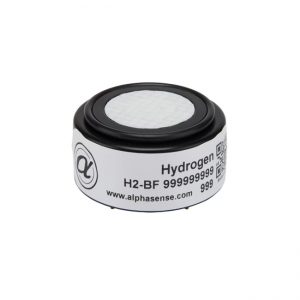
To detect hydrogen concentration, the AG-4 module can be used in combination with the Alphasense A-series H2-BF electrochemical hydrogen sensor for reliable pre-calibrated measurements. With a diameter of 32 mm, it is ideal for online gas detection systems.
Its high accuracy is critical for safety, medical applications, air quality assessment, and industrial hydrogen monitoring. Key features include high performance, no leakage, and digital outputs such as UART, TTL, and RS232, along with factory pre-calibration.
Conclusion
Hydrogen plays an increasingly important role in modern power systems, but its associated risks cannot be ignored.
By deploying electrochemical hydrogen sensors and implementing effective monitoring systems, hydrogen leaks can be detected early, significantly reducing safety risks.
As hydrogen applications continue to expand, reliable hydrogen detection technologies will become even more critical for ensuring safe and efficient energy operations.