The diamond and industrial diamond processing industry has evolved far beyond traditional machining methods that relied heavily on operator experience. Today, the integration of diamond tooling, laser machining, high-pressure gas control, CNC automation, and additive manufacturing (3D printing) has transformed modern processing equipment into highly intelligent systems capable of delivering greater precision, higher productivity, and improved consistency.
Within this increasingly sophisticated manufacturing environment, oxygen sensors have become an essential component for ensuring process safety, maintaining machining quality, and minimizing equipment risks. Continuous oxygen monitoring in diamond processing enables manufacturers to detect abnormal atmospheric conditions, optimize protective gas environments, and support reliable automated production.
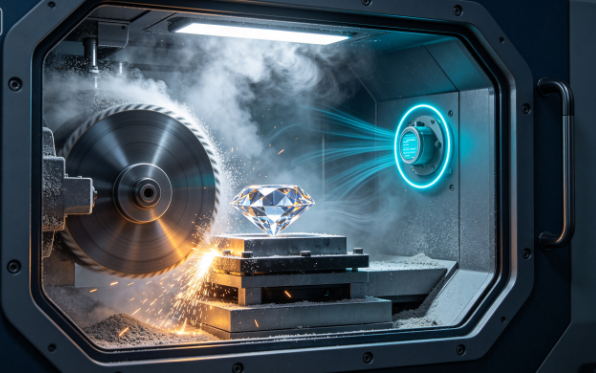
Diamond Processing Equipment: From Precision Machining to Additive Manufacturing
Diamond is the hardest naturally occurring material known and is widely used not only in jewelry but also in industrial cutting tools, semiconductor molds, optical components, high-temperature applications, aerospace manufacturing, and other advanced engineering industries.
To manufacture these products, modern diamond processing equipment performs a wide variety of operations including:
- Precision cutting
- Polishing
- Grinding
- Shaping
- Mold finishing
- Surface treatment
Typical equipment includes:
Diamond Wire Cutting Machines
Diamond wire saws are widely used for precision cutting of natural diamonds, polycrystalline diamond (PCD), cemented carbide, ceramics, and semiconductor materials. These machines require extremely accurate motion control to achieve clean cutting surfaces while minimizing material loss.
Laser Diamond Cutting Machines
Laser systems utilize concentrated high-energy beams to perform micro-cutting, drilling, grooving, engraving, and complex contour machining. Because laser processing generates extremely high localized temperatures, maintaining a controlled processing atmosphere becomes critical.
Diamond Polishing Machines
Diamond polishing equipment combines diamond grinding wheels, polishing discs, polishing compounds, and precision motion systems to produce ultra-smooth surfaces with tight dimensional tolerances.
CNC Diamond Machining Centers
Computer Numerical Control (CNC) machining centers enable manufacturers to produce complex curved surfaces, mold cavities, customized diamond tools, and other precision components with excellent repeatability.
3D Printing and Post-Processing Equipment
Additive manufacturing technologies are increasingly being applied to diamond composites, metal-bond diamond tools, and ultra-hard material components. Post-processing systems further refine printed parts through machining, polishing, and finishing operations.
Although these machines serve different purposes, they all share several demanding operating characteristics:
- Processing extremely hard materials
- High-precision motion control
- High-energy machining
- Significant thermal loads
- Strict environmental control requirements
Particularly in additive manufacturing systems, diamond materials are often combined with metals, ceramics, or composite materials to form functional components rather than simply being machined individually. As a result, environmental parameters such as oxygen concentration become increasingly important throughout the manufacturing process.
Environmental Challenges in Diamond Processing
Diamond machining presents one of the most demanding manufacturing environments. During cutting, polishing, laser processing, and heat treatment, several environmental factors can directly influence both equipment performance and product quality.
High Temperature and Thermal Shock
Laser cutting, high-speed grinding, and dressing of diamond grinding wheels all generate substantial localized heat.
Although diamond possesses exceptionally high thermal conductivity, excessive temperatures may still cause:
- Graphitization
- Thermal damage
- Surface oxidation
- Changes in material properties
To prevent these issues, the machining environment must effectively control heat accumulation and maintain stable atmospheric conditions.
Why Oxygen Concentration Matters
At elevated temperatures, oxygen directly accelerates oxidation reactions. Excess oxygen can increase oxidation rates and degrade the quality of precision-machined diamond surfaces.
For this reason, many advanced manufacturing systems continuously monitor oxygen concentration rather than relying solely on temperature measurements.
Dust and Fine Particle Contamination
Diamond processing inevitably generates microscopic dust particles and abrasive debris.
These particles can negatively affect:
- Optical lenses
- Sensor windows
- Linear guides
- Bearings
- Sealing structures
- Precision mechanical assemblies
Over time, contamination may reduce measurement accuracy, increase mechanical wear, and raise maintenance costs.
Maintaining a clean and well-monitored processing environment is therefore essential for ensuring long-term equipment reliability.
Protective Gas Atmospheres and Oxidation Risks
Many diamond processing operations—including laser cutting, high-temperature grinding, additive manufacturing, and heat treatment—operate under carefully controlled protective gas atmospheres.
The oxygen concentration inside these environments directly influences:
- Oxidation reactions
- Fire hazards
- Surface quality
- Process stability
- Protective gas efficiency
If oxygen concentration becomes excessively high, certain high-temperature processing zones may experience accelerated oxidation, uncontrolled chemical reactions, or even combustion risks.
Conversely, insufficient control of oxygen levels may reduce the effectiveness of nitrogen or argon shielding gases, resulting in inconsistent machining quality.
Because of these challenges, an oxygen sensor for diamond processing should provide the following capabilities:
- High-temperature operation or advanced temperature compensation
- Excellent long-term stability with minimal calibration requirements
- Fast response to rapid oxygen concentration changes
- Reliable operation inside enclosed chambers and inert gas environments
- Stable output signals compatible with PLC, CNC, and industrial safety systems
These characteristics ensure accurate oxygen monitoring in diamond processing, enabling manufacturers to maintain consistent production quality while improving operational safety.
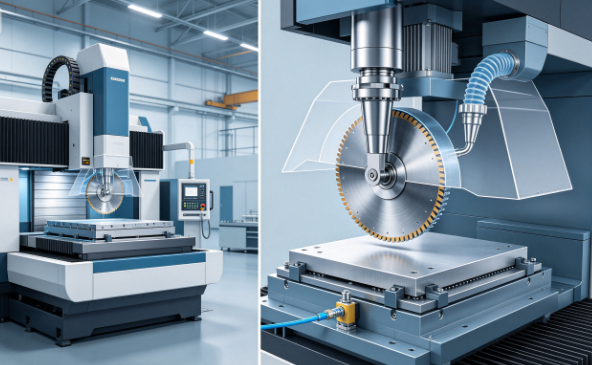
Why Oxygen Sensors Are Essential in Diamond and Synthetic Diamond Processing Equipment
The role of an oxygen sensor extends far beyond simply measuring oxygen concentration. In modern diamond processing equipment, oxygen monitoring contributes to safety management, process optimization, equipment protection, and product quality assurance.
1. Early Safety Warning
During laser cutting, high-speed grinding, and 3D printing post-processing, localized high temperatures combined with combustible gases or dust may create hazardous conditions.
By continuously monitoring oxygen concentration inside enclosed chambers, machining cabins, dust collectors, inert gas pipelines, and critical equipment compartments, oxygen sensors enable the control system to:
- Trigger alarms before dangerous conditions develop
- Shut down heat sources automatically
- Activate inert gas protection
- Start emergency ventilation systems
These functions help reduce the risk of fire, oxidation, and unexpected process failures.
2. Protective Atmosphere Monitoring
Many high-precision diamond manufacturing processes require a stable protective atmosphere using nitrogen or argon.
A zirconia oxygen sensor helps verify whether:
- The inert gas completely covers the processing area
- Air leakage is occurring
- Gas supply remains stable
- Chamber seals are functioning properly
Maintaining low oxygen levels significantly reduces surface oxidation, improves machining consistency, and extends tool life.
3. Improving Process Stability
Diamond machining is extremely sensitive to environmental variations.
Abnormal oxygen concentrations may indicate:
- Insufficient shielding gas
- Door seal leakage
- Ventilation imbalance
- Filter failure
- Gas flow abnormalities
Continuous oxygen monitoring allows equipment control systems to detect these issues much earlier, minimizing scrap rates and improving overall production efficiency.
Recommended Oxygen Sensor for Diamond and Synthetic Diamond Processing Equipment
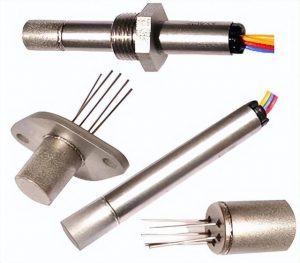
For manufacturers seeking a reliable oxygen sensor for diamond processing, ISweek recommends the SST Zirconia Oxygen Sensor O2S-FR-T2-18X, which is specifically designed for demanding industrial environments.
SST Zirconia Oxygen Sensor O2S-FR-T2-18X Description
The O2S-FR-T2-18X is a threaded zirconia oxygen sensor manufactured by SST and designed for applications operating under harsh environmental conditions.
Its threaded probe design allows quick installation and replacement, making it suitable for:
- Industrial coal, oil, gas, and biomass boiler combustion control
- Continuous Emission Monitoring Systems (CEMS)
- Controlled atmosphere monitoring
- Industrial process control
- Diamond and synthetic diamond processing equipment
SST’s threaded zirconia oxygen sensors utilize a unique closed-loop measurement system. While continuously measuring oxygen concentration, the sensor simultaneously generates a heartbeat signal that provides immediate warning of any internal fault, improving system reliability.
Unlike consumable electrochemical sensors, the zirconia sensing cell is non-depleting, resulting in an exceptionally long service life.
Additional advantages include:
- No reference gas required
- Simple one-point calibration using fresh air or any known gas concentration
- Operating gas temperatures from -100°C to 250°C
- Fast response time of less than 4 seconds
- Linear output signal
- Service life of up to 10 years (depending on application)
- Wide oxygen measurement range from 0.1% to 100% O₂
These characteristics make the sensor highly suitable for oxygen monitoring in diamond processing, laser machining systems, heat-treatment equipment, and controlled-atmosphere manufacturing.
Key Features of the SST O2S-FR-T2-18C Zirconia Oxygen Sensor
The zirconia oxygen sensor O2S-FR-T2-18C shares the same proven zirconia sensing technology and offers several features that make it ideal for demanding industrial applications:
- Non-consumable zirconia (ZrO₂) sensing element
- Fully stainless-steel construction for harsh industrial environments
- Threaded installation (M18 × 1.5)
- Lead-wire and connector termination
- Operates with an external interface board
- No reference gas required
- No temperature stabilization required
- Integrated heating element
Its rugged design enables long-term, reliable oxygen measurement in applications involving high temperatures, dust, vibration, and challenging process conditions.
Why Choose a Zirconia Oxygen Sensor for Diamond Processing?
Compared with conventional oxygen sensing technologies, zirconia oxygen sensors offer several advantages in precision manufacturing environments:
- Excellent stability during continuous operation
- Long operational lifetime with minimal maintenance
- Fast response to oxygen concentration changes
- High-temperature capability
- Accurate monitoring in inert gas atmospheres
- Easy integration with PLC, CNC, and industrial automation systems
For manufacturers investing in automated diamond processing, laser machining, and additive manufacturing, selecting a reliable oxygen sensor for diamond processing is an effective way to improve equipment safety, maintain process consistency, and reduce maintenance costs.
Conclusion
Diamond cutting, polishing, and 3D printing-based manufacturing are transforming from experience-driven operations into fully data-driven production processes. Environmental monitoring has therefore become an essential part of intelligent manufacturing.
Among various monitoring devices, the zirconia oxygen sensor plays a vital role by continuously tracking oxygen concentration in critical processing environments. It helps manufacturers detect abnormal conditions involving high temperatures, dust, oil mist, and protective gas atmospheres before they impact product quality or equipment safety.
Whether used in laser cutting, CNC machining, additive manufacturing, or heat treatment, an oxygen sensor for diamond processing provides continuous real-time data that supports safer operation, more stable processes, and higher production quality.
The SST O2S-FR-T2-18X and O2S-FR-T2-18C offer a combination of durability, fast response, high-temperature performance, and long service life, making them excellent solutions for modern diamond and synthetic diamond processing equipment.